
The outside changes the bite
Boudin Casing
Boudin is commonly stuffed into a casing, but there is no single rule that says every casing should be eaten. The useful questions are what kind of casing it is, how it was prepared, what texture it has, and whether you enjoy that texture.
Can you eat it?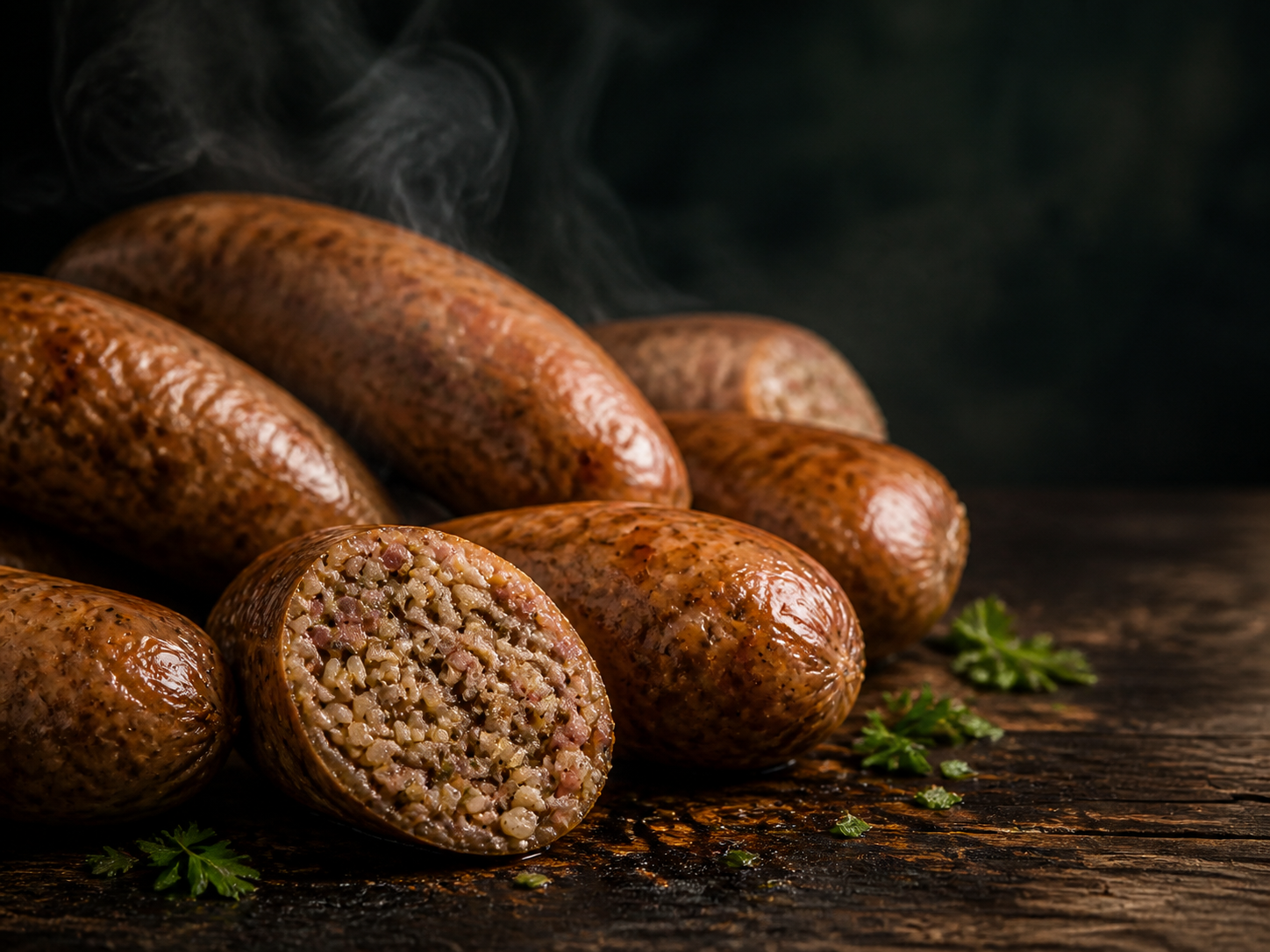
Structure and texture
What is boudin casing?
The casing is the thin outer tube that holds boudin filling in the familiar shape of a sausage link. It is one part of the food, not the definition of the food itself. For that broader foundation, start with what boudin is.
- Holds the filling
- The casing contains the cooked meat, rice, broth, and seasonings so the mixture can be formed and handled as a link.
- Gives the link shape
- It keeps the soft filling together during storage, heating, serving, and eating.
- Shapes the first bite
- A casing may feel tender, chewy, crisp, or snappy and can carry browning or smoke on the exterior.
Casings are not all alike
What is boudin casing made of?
The answer depends on the maker and product. Boudin may be filled into a natural casing or a manufactured casing. A label or the producer is the best source when the casing material matters for a particular package.
Natural casing
Natural sausage casing is made from cleaned animal intestine. Its diameter and thickness can vary, so one link may feel more delicate while another has more chew. Natural does not automatically mean soft, crisp, or superior.
Manufactured casing
Manufactured casings are made for consistency and handling. Some are edible and some are intended to be removed, depending on the material and product. Do not assume that every smooth or uniform casing has the same eating instructions.
The direct answer
Can you eat boudin casing?
Many boudin casings are edible, but edible does not necessarily mean that every eater will enjoy the texture. Check the package or ask the maker when the casing type is unclear.
When the casing is edible, eating it is still a choice. Some people like a tender or browned casing around the filling. Others remove a casing that feels tough or simply prefer the filling by itself. Neither choice is a test of authenticity.
Why some casing is tough
A thicker casing, surface drying, longer exposure to dry heat, or intense heat can produce more chew. Storage and the condition of the individual link can matter too, so toughness rarely has one universal cause.
Why some casing is tender
A thinner casing, more surface moisture, and gentler or moist heating can produce a softer bite. Tenderness is a texture, not proof that one maker or method is more correct than another.
Heat changes the exterior
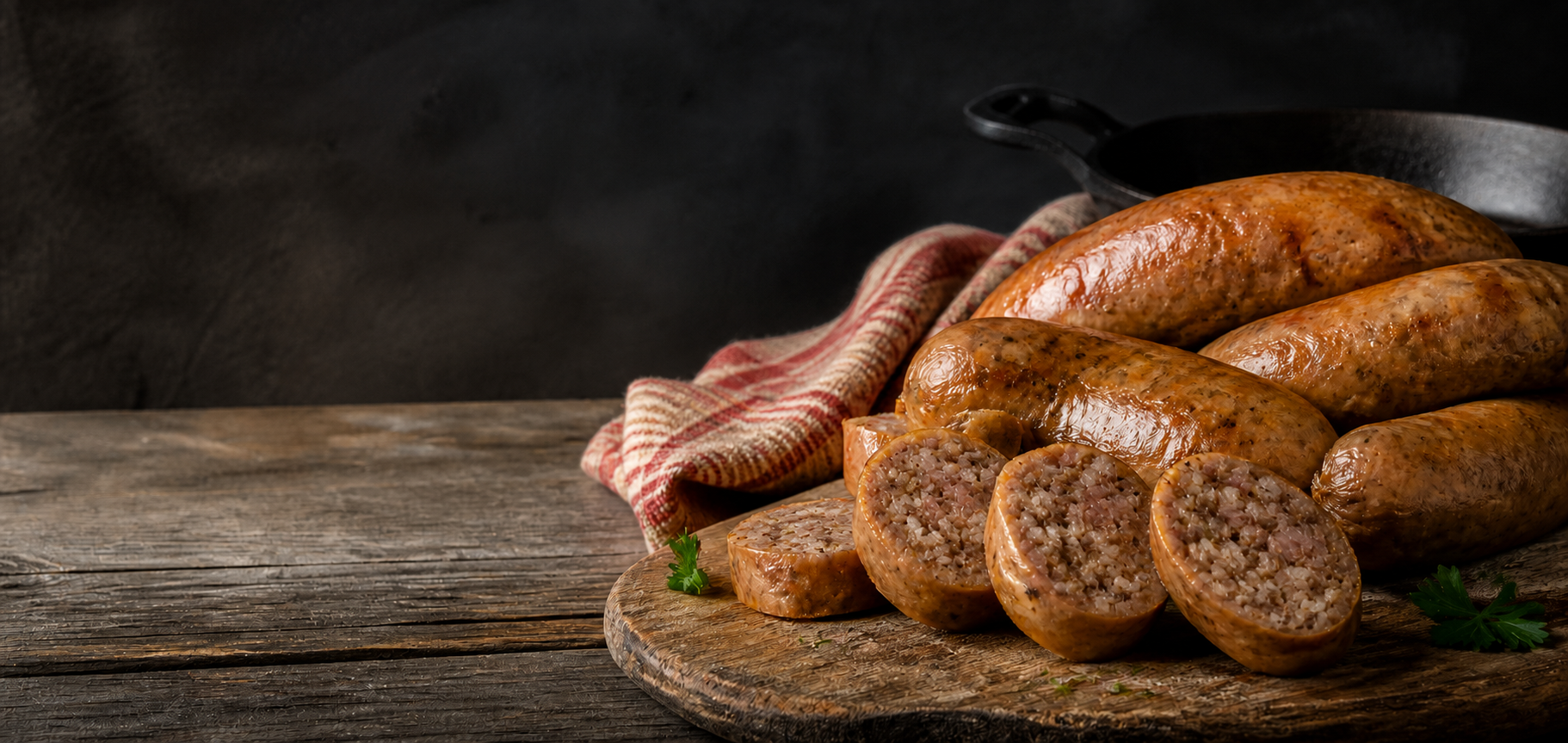
How preparation changes casing
Moisture, heat intensity, and exposure time all affect the surface. These are broad tendencies, not guarantees; casing type, link condition, and product directions still matter.
Steam
Often keeps the casing softer and more supple because the heat is moist.
Grill
Can add browning, a firmer bite, and some crispness where the casing meets the heat.
Bake
Can firm the exterior, especially when the links spend more time uncovered.
Air fry
Can create a drier, crisper surface as hot circulating air removes exterior moisture.
When you prefer the filling
Removing the casing is straightforward
Let the link cool enough to handle. You can peel the casing away, split it lengthwise and lift out the filling, or open one end and gently squeeze the filling out.
A casing that clings tightly may separate more easily after a shallow lengthwise split. Use care around hot filling and avoid treating one technique as the only proper way to eat boudin.
More than a wrapper
Does casing affect flavor?
Casing usually changes the eating experience most through texture, but preparation can add flavor at the surface too. Browning can deepen roasted notes, while smoke may settle on the exterior and make the first bite more aromatic.
A tender casing may keep attention on the filling. A crisp, chewy, or smoked casing can become a more noticeable part of the bite. The effect depends on the link rather than one rule for all boudin.