Local counters
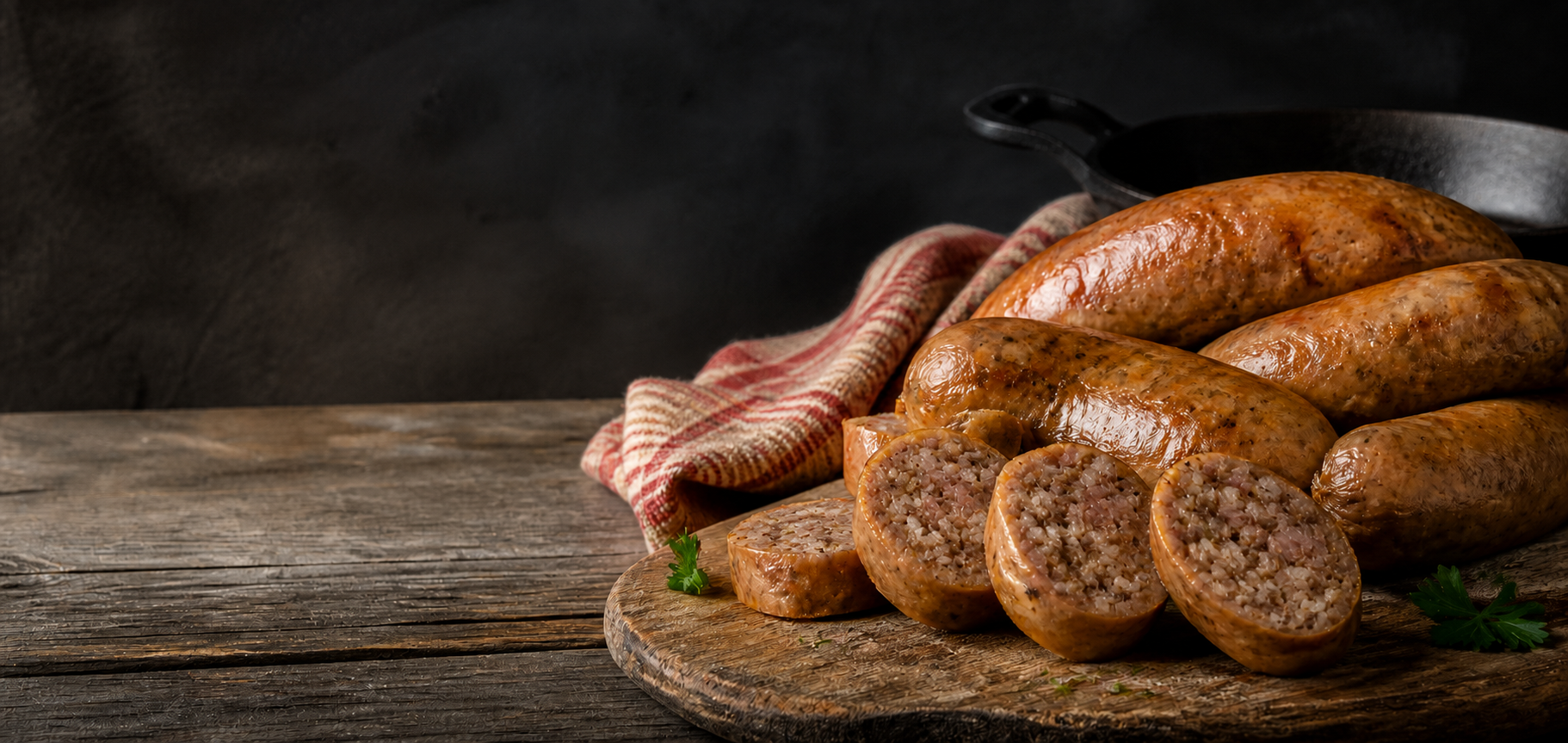
Meat markets, smokehouses, groceries, and roadside stops make warm boudin an ordinary part of the regional food landscape.

Boudin is most closely associated with South Louisiana, especially Acadiana, where it remains part of everyday food culture rather than one ceremonial dish or fixed recipe.
Its identity comes from place as much as ingredients: family recipes, local meat markets, smokehouses, roadside counters, and the preferences of individual makers all shape what goes into a link and how it tastes.
Why Louisiana matters
Meat markets, smokehouses, groceries, and roadside stops make warm boudin an ordinary part of the regional food landscape.
Recipes move through families and businesses, changing with available ingredients, remembered proportions, and technique.
A link may be breakfast, a road snack, part of a gathering, or something carried home. Context changes without changing the food.
Acadiana and South Louisiana
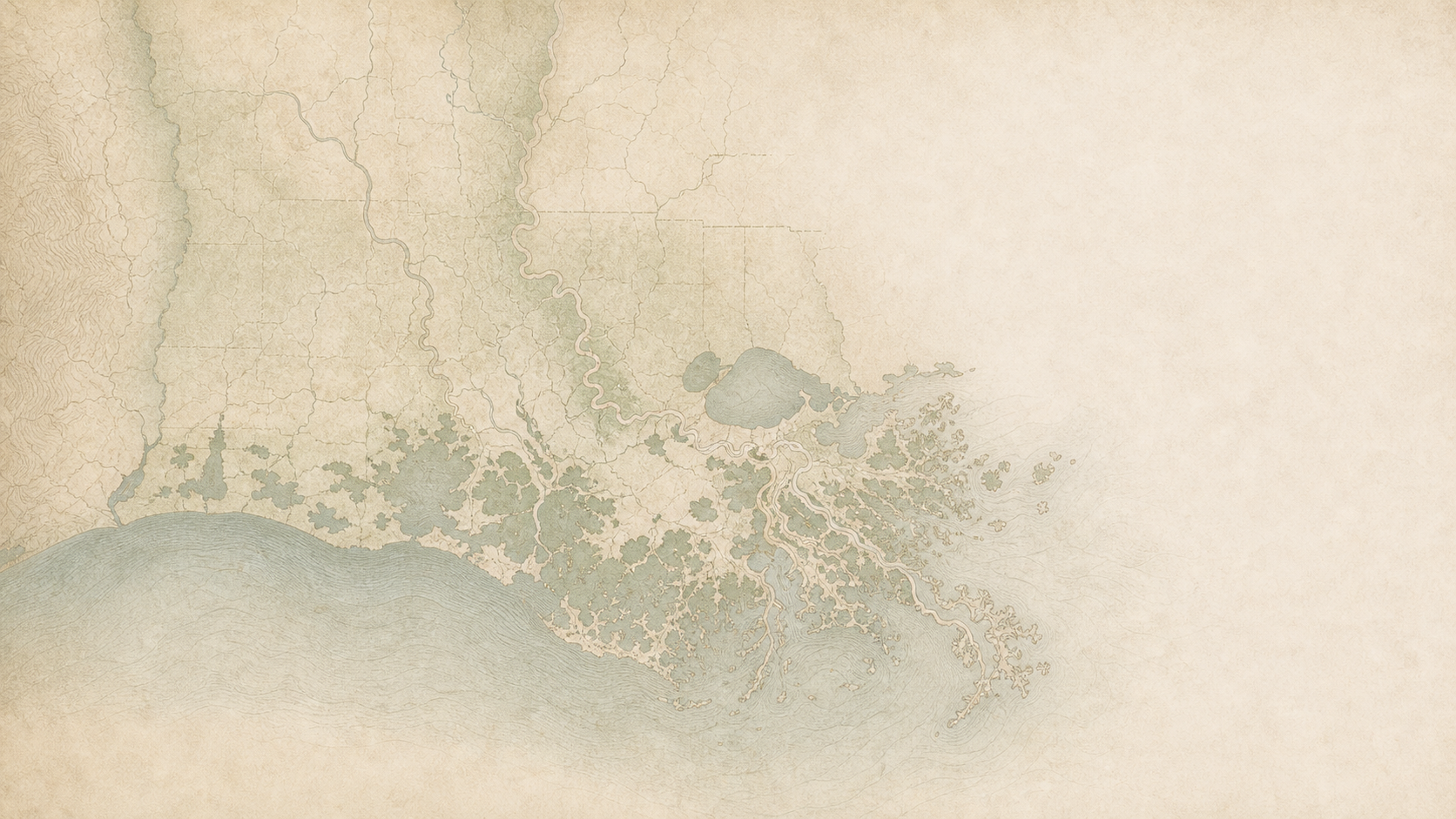
Acadiana is a cultural region within South Louisiana, not a single city and not a hard line separating one boudin formula from another. Boudin is especially visible there, but it also appears across neighboring communities and elsewhere in the state.
Towns can develop recognizable habits, yet those habits overlap. Two makers a few miles apart may produce noticeably different links, while makers farther apart may share a similar balance of pork, rice, pepper, herbs, moisture, or smoke.
Geography provides context. It does not make one town, family, or business the standard for every legitimate Louisiana boudin.
Regional and maker variation
Place matters, but the recipe and the maker's decisions are usually more useful than a town name alone when comparing two links.
The balance may be rich and pork-forward or lighter and more rice-forward.
Liver can be prominent, subtle, or absent, while the grind may be coarse or fine.
Broth, fat, and mixing shape whether the filling is loose, juicy, creamy, or firm.
Black pepper, cayenne, green onion, parsley, and other herbs shift the flavor.
Fresh, smoked, tender, or firm casings change the aroma and first bite.
Family habits, equipment, batch size, and technique leave a recognizable signature.
One tradition, many formulas
No single recipe defines all Louisiana boudin. Pork, rice, broth, aromatics, and seasoning provide a recognizable starting point, but the proportions and methods vary among towns, families, and makers.
That variation is part of the tradition, not evidence that one version is automatically authentic and another is not. The broad definition belongs in the guide to what boudin is; this page explains why Louisiana place and practice keep the definition from becoming one rigid formula.
At the counter and at home
Boudin may be eaten warm from the casing, carried on the road, served with crackers, or shared at home and gatherings.
See how people in Louisiana eat boudinProtein, smoke, heat, and form
Pork is the traditional reference point, while seafood, alligator, spicy, smoked, and ball preparations show how the food changes without becoming one exhaustive list.
Compare the types of boudinA deeper timeline
Louisiana boudin grew through adaptation: inherited foodways, local ingredients, preservation, thrift, and community practice changed over generations.
A dedicated history guide will carry that deeper account.
Louisiana boudin is a living regional tradition. Future town or maker profiles should be built only from verified fieldwork, interviews, and documented sources; no directory or ranking is implied here.