
A practical tasting guide
What Does Boudin Taste Like?
Boudin is usually savory, peppery, and broth-rich, with meat and rice sharing the bite. The exact flavor changes with the maker.
Boudin does not have one fixed taste. It is a balance of meat, rice, broth, seasoning, texture, casing, and finish. One link may be pork-forward and coarse; another may be soft, herb-bright, smoky, or hot.
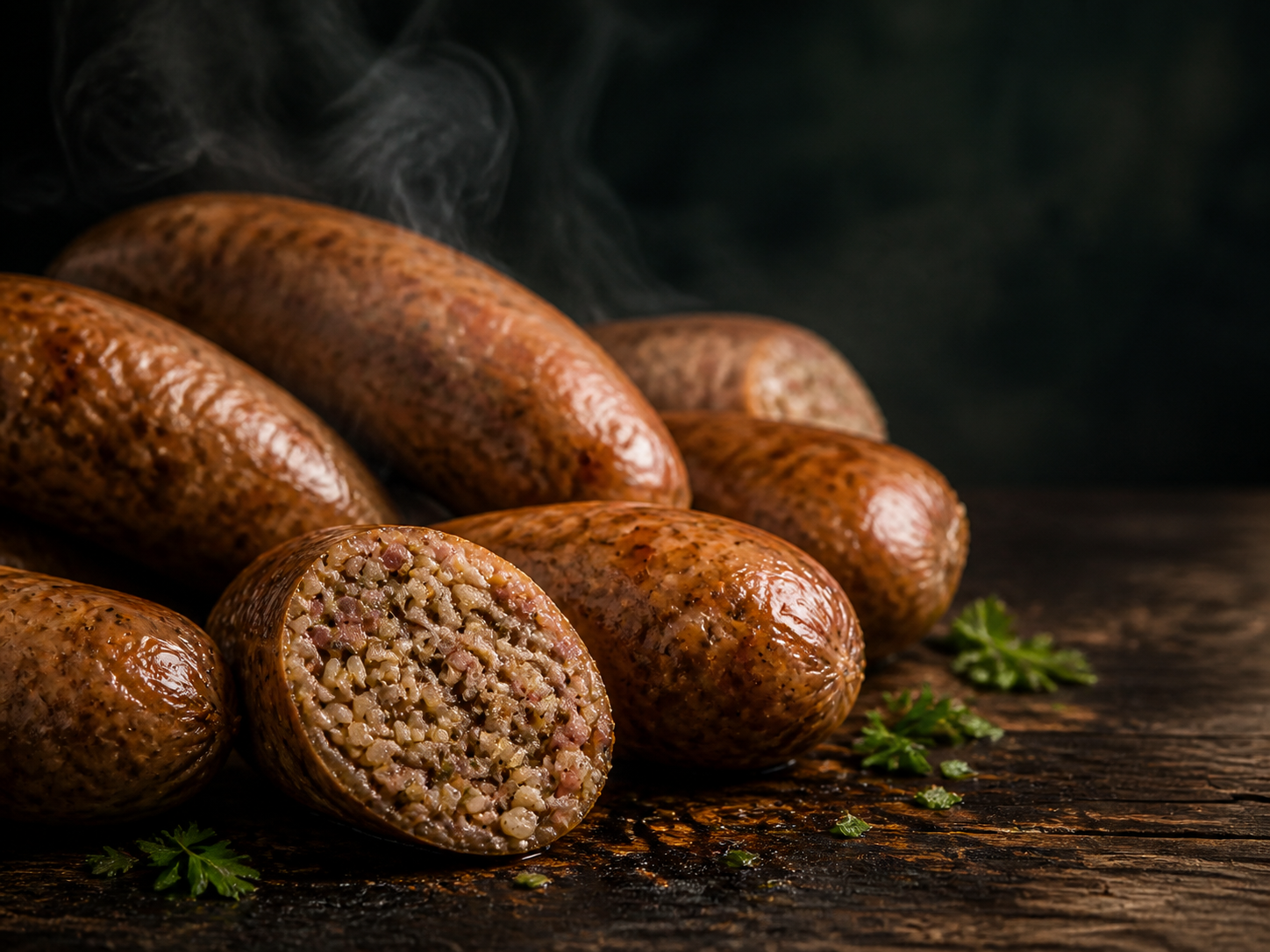
Flavor comes from balance
Six parts shape every bite.
No single part tells the whole story. Taste how each one supports the next, and the maker's choices become easier to notice.
Meat & rice
Pork brings richness and savoriness. Rice carries broth and seasoning while softening the meat's weight. Either can lead without making the link wrong.
Broth & moisture
Seasoned cooking liquid spreads flavor through each grain. It can make the filling juicy and cohesive or, when used lightly, firmer and more distinct.
Seasoning
Black pepper, cayenne, garlic, onion, green onion, parsley, and other aromatics can make a link earthy, bright, warm, or sharp.
Texture
A fine grind and soft rice can feel creamy. A coarser grind and firmer grains create a looser filling with more separate bites.
Casing & smoke
A tender casing keeps attention on the filling. A crisp or smoked casing adds snap, aroma, and a darker first impression.
Finish
Pepper, smoke, herbs, pork richness, or a gentle mineral note may remain after the bite. The finish often reveals what leads the recipe.
Taste with a sequence
A simple framework for comparing boudin
Warm two or three links the same way and taste them without heavy condiments first. This is not a scorecard or a search for one correct style. It is a way to describe what you prefer and why.
- 01
Notice the aroma
Before the first bite, look for warm broth, pork, smoke, green onion, garlic, and pepper. Aroma often tells you whether the link will be meat-forward, herb-forward, or smoky.
- 02
Read the first bite
Notice the casing first, then the moisture of the filling. Is the exterior tender or crisp? Does the filling feel juicy, creamy, loose, firm, or dry?
- 03
Find the balance
Ask what leads: pork, rice, broth, herbs, liver, pepper, or smoke. Then notice whether the other parts support that lead or compete with it.
- 04
Follow the finish
Wait a moment after swallowing. Lingering black pepper, cayenne, smoke, herbs, or richness can be more revealing than the first taste.
A brief liver note
Depth does not always taste like liver
Liver can add earthy, mineral depth, but the amount varies and may be difficult to identify on its own. It often works behind pork, broth, herbs, and pepper rather than becoming the main flavor.
Heat is not one scale
Peppery and spicy are different clues
Black pepper can feel aromatic and warm, while cayenne or chile may build sharper heat. A link can be strongly seasoned without being especially hot, and labels such as regular or hot remain specific to each maker.
Smoke changes structure
Smoke affects more than aroma
Smoking can deepen the finish, dry the surface slightly, and firm the casing. That added texture makes smoked boudin feel different even when its filling follows a familiar recipe.
The name gives only one clue
How different types tend to taste
Protein, smoke, and heat shift the sensory profile, but the recipe and the maker still matter. These are useful tendencies, not fixed definitions.
Pork boudin
Usually savory and broth-rich, with pork, rice, pepper, and aromatics sharing the bite. It is the useful reference point, not a single fixed flavor.
Crawfish boudin
Often lighter in meat flavor and more seafood-forward, with crawfish sweetness, butter, herbs, or pepper becoming more noticeable.
Shrimp boudin
Typically mild and delicate, leaving more room for aromatics, broth, and seasoning to shape the flavor around the shrimp.
Alligator boudin
Often leaner in impression, supported by added fat, rice, and seasoning. The result depends heavily on moisture and the maker's spice balance.
Spicy boudin
Heat may arrive quickly or build in the finish. Black pepper and cayenne can add warmth without covering the meat, rice, and broth.
Smoked boudin
Smoke deepens the aroma, firms the casing, and can make the whole link taste darker even when the filling starts with a familiar recipe.
Why the same name tastes different
The maker controls the balance.
Cut of meat, amount of rice, concentration of broth, grind, liver, herbs, pepper, moisture, casing, and smoke all change the result. Family recipes and equipment add another layer of variation.
That is why a soft, rice-forward link and a coarse, pork-forward link can both belong to the same Louisiana food tradition. The useful question is not which one follows the only correct formula, but how clearly and pleasantly its parts work together.
Start with the definition of what boudin is, then explore the broader types of boudin to put those sensory differences in context.