
A Louisiana food tradition
What Is Boudin?
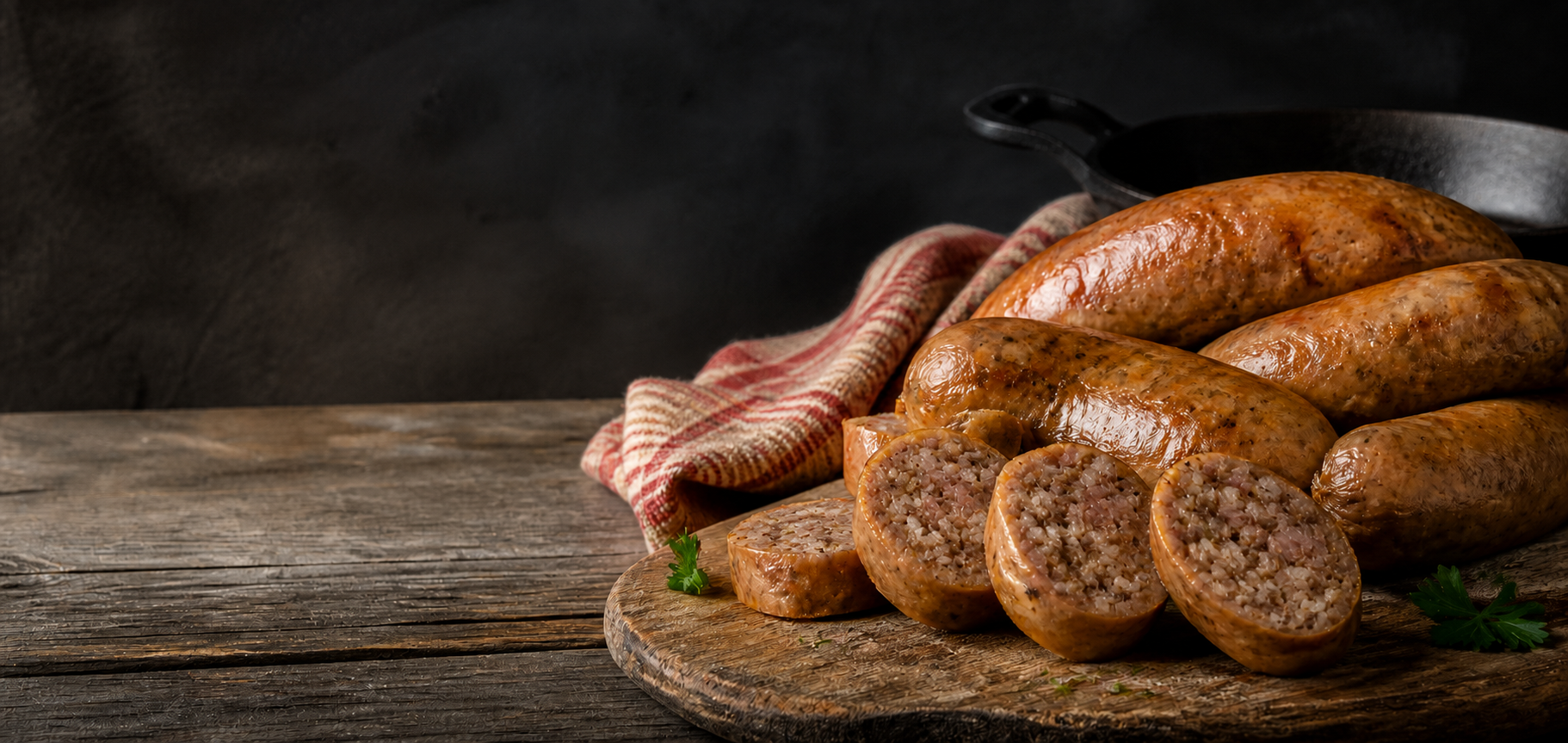
Louisiana boudin is a cooked mixture of meat, rice, broth, aromatics, and seasoning, commonly stuffed into a casing.
The filling is soft, savory, and rice-rich rather than firm and all-meat. Every maker chooses a different balance, which is why two links can share the same name and still taste and feel quite different.
The identity of the link
What makes boudin distinct
Boudin depends on the relationship between its ingredients, not on one fixed formula. Meat brings richness. Rice absorbs broth and seasoning. Aromatics and pepper shape the finish. The casing holds the mixture together but does not define the filling.
Texture matters as much as flavor. One maker may produce a coarse, pork-forward link; another may make a softer filling with more rice, herbs, or moisture. Those differences are part of the food rather than departures from a single standard recipe.
Meat
Cooked pork is the usual base, though recipes vary and some include liver or use other proteins.
Rice
Rice carries seasoned broth through the filling and gives boudin its soft, recognizable texture.
Broth
Cooking liquid adds moisture and distributes the flavor of the meat, aromatics, and seasoning.
Seasoning
Onion, green onion, parsley, pepper, and other aromatics change with the maker and recipe.
A familiar shape, a different food
Is boudin a sausage?
Boudin is commonly treated as a sausage because the filling is often packed into a casing. But it differs from many conventional sausages: the filling is cooked before stuffing, rice is central to its texture, and the finished link is soft rather than springy or densely ground.
It is best understood on its own terms as a Louisiana food shaped by meat, rice, broth, seasoning, casing, and the hand of the maker.
Inside the filling
What goes into boudin?
Traditional pork boudin usually begins with cooked pork, rice, seasoned broth, onion, herbs, and pepper. The cuts of meat, amount of rice, liver, aromatics, spice, and moisture vary by recipe.
See what boudin is made of, whether boudin contains liver, and why boudin contains rice for the deeper ingredient questions. The boudin casing has its own role in holding, heating, and eating the link.
Flavor and variation
What does boudin taste like?
Pork boudin is usually savory and peppery, with rice softening the richness of the meat and carrying the flavor of broth and aromatics. Liver can add depth; green onion and parsley can add freshness; smoke can change both the casing and finish.
The full guide to what boudin tastes like explains how to notice those differences without treating one style as the only correct one.
Place and process
Where does boudin come from?
The familiar meat-and-rice link is closely tied to South Louisiana, especially Acadiana, where families, markets, groceries, and smokehouses developed their own versions from local ingredients and practical cooking traditions.
Explore the regional context of Louisiana boudin and the longer history of boudin. For the kitchen overview, see how boudin is made.