
Choose by the result you want
How to Cook Boudin
Steam for a soft casing, grill for browning, bake a larger batch, air fry for speed and exterior texture, or microwave when time is tight. Follow the package first because fresh, refrigerated, frozen, and fully cooked products do not all need the same treatment.
Compare methods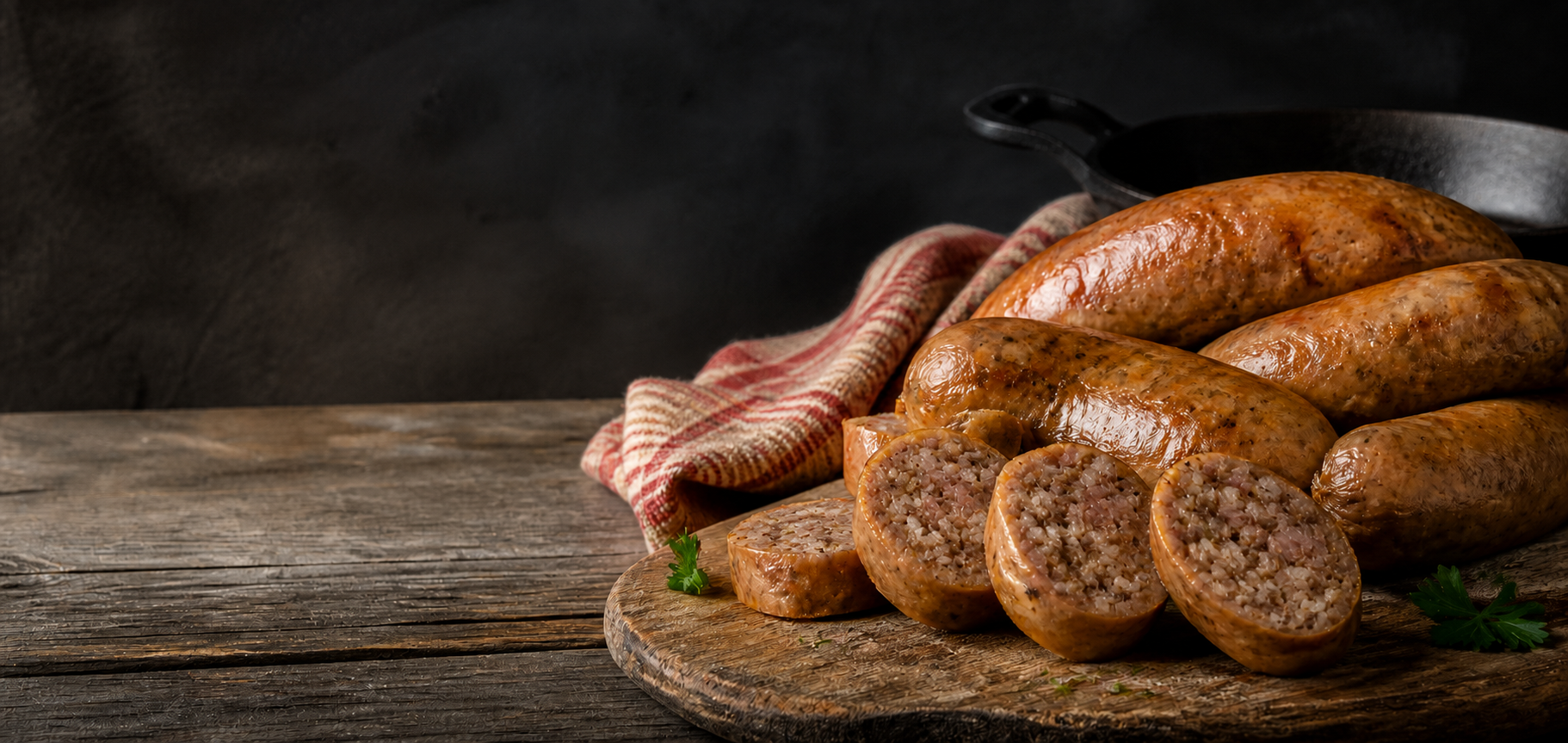
Quick method chooser
Match the heat to the outcome
These are practical tendencies, not guarantees. Casing, filling, link diameter, starting temperature, packaging, and appliance power all affect the result.
Steam
Soft, moist casing
Grill
Browned casing with bite
Bake
Convenient for several links
Air fry
Fast, firmer exterior
Microwave
Fastest practical option
Does boudin need cooking or reheating?
It depends on the product. Many packaged links are fully cooked and need thorough reheating, but that is not universal. Follow the label for the specific boudin and account for whether it is fresh, refrigerated, frozen, or already cooked.
Five primary methods
Heat the center without sacrificing the filling
Gentle, moist heat
Steam for a soft casing and moist filling
Steaming warms the filling without placing the casing against an intense hot surface. It is the most forgiving choice when tenderness matters more than browning.
- 1
Check the package and confirm the product's condition and directions.
- 2
Bring a shallow layer of water to a gentle simmer and keep it below the steamer basket.
- 3
Arrange links in one layer, cover, and heat gradually until the centers are thoroughly hot.
- 4
Remove carefully and rest briefly before serving; the filling holds heat.
Watch for: Avoid a hard boil and crowding. Both can stress delicate casings or cause uneven heating. Steam will not crisp the exterior.
Controlled dry heat
Grill for browning and casing bite
A grill can brown the casing and add a firmer bite, but the center needs time to warm before the exterior faces stronger heat.
- 1
Check the product directions and prepare a moderate indirect zone plus a hotter finishing zone.
- 2
Warm links over indirect heat with the lid closed, turning gently with tongs.
- 3
Once the centers are hot, move the links briefly over direct heat for color and texture.
- 4
Serve promptly so the filling stays moist.
Watch for: High flame from the start can split the casing while the middle remains cold. Do not pierce the casing; that releases moisture and filling.
Steady batch cooking
Bake when you are heating several links
The oven gives several links steady heat with less attention than grilling. Covering favors tenderness; an uncovered finish adds exterior texture.
- 1
Follow the package temperature when provided. For reheating previously cooked food, use an oven no lower than 325°F.
- 2
Arrange links in a shallow pan without stacking them.
- 3
Cover loosely when a softer casing is the goal, and turn once for more even heating.
- 4
Uncover briefly near the end if you want a firmer exterior, then verify the centers are hot.
Watch for: Long uncovered heating can dry the rice filling. Link diameter, pan material, starting temperature, and batch size make a universal bake time unreliable.
Fast circulating heat
Air fry for speed and a firmer exterior
An air fryer works well for one or two refrigerated links when you want speed and more casing texture than a microwave provides.
- 1
Check the label and preheat only if your appliance instructions call for it.
- 2
Place links in one layer with room for air to circulate.
- 3
Use moderate rather than maximum heat and turn midway through heating.
- 4
Check early, then continue in short increments until the centers are thoroughly hot.
Watch for: Air-fryer power varies widely. A dry or thin casing can firm before the center warms, so reduce heat if the outside is racing ahead.
Quickest, least exterior control
Microwave when speed matters most
Microwaving is practical for a single refrigerated link, but it does not brown the casing and can create hot and cold spots.
- 1
Confirm the product is suitable for microwaving and remove packaging that is not microwave-safe.
- 2
Place the link in a microwave-safe dish and cover it with a vented microwave-safe cover.
- 3
Heat in short intervals, turning between intervals so the center warms more evenly.
- 4
Allow standing time, then check the center before serving.
Watch for: A hot casing does not prove the middle is hot. High power for too long can toughen the casing and dry the filling.
Starting from frozen
Let the package decide whether to thaw first
Some products are designed to heat from frozen; others produce a more even result after refrigerator thawing. Never assume the same rule applies to every boudin.
When heating from frozen is allowed, use gentler heat and expect the center to take substantially longer than the casing. A hot exterior with a frozen center increases the chance of splitting and uneven heating.
Refrigerator thawing is usually the most forgiving option when permitted. Food thawed with cold water or a microwave should be heated promptly under the applicable product and food-safety guidance.
Troubleshooting
Read the casing and filling separately
Most problems point to heat intensity, exposure time, starting temperature, or the condition of the link. Treat each symptom as a clue rather than a universal diagnosis.
- The casing split
- Lower the heat, move away from direct flame, and warm the center more gradually. A damaged casing or frozen center can also contribute.
- The casing became tough
- Choose gentler heat or steam next time. Extended dry heat and high air-fryer or grill temperatures increase casing firmness.
- The filling dried out
- Shorten uncovered heating, avoid repeated reheating, and use a covered pan or steam when moisture is the priority.
- The center stayed cold
- Use lower, steadier heat for longer and check more than one spot when practical. Frozen or crowded links need extra attention.