
From package to plate
How to Eat and Cook Boudin
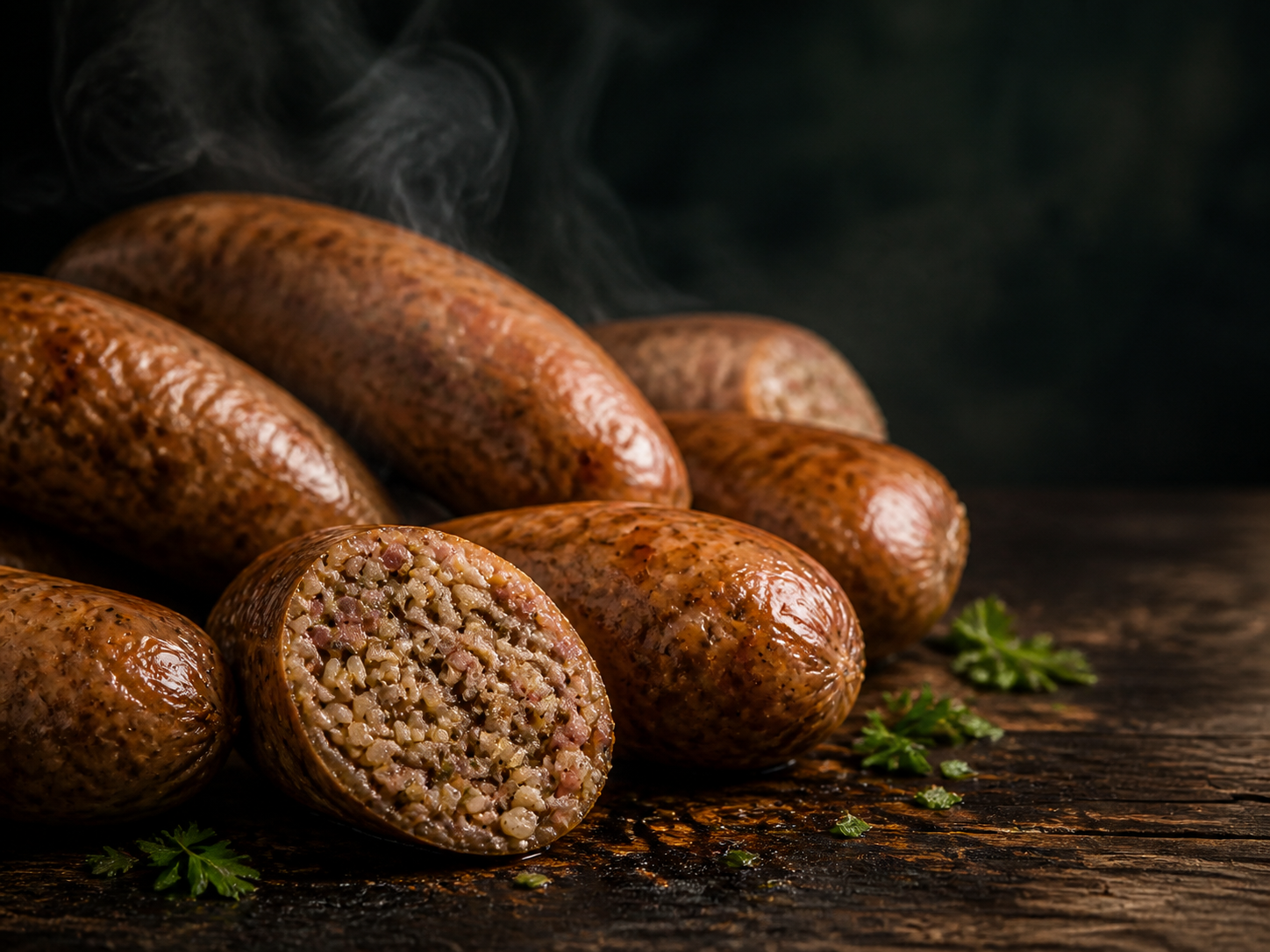
Boudin is commonly eaten warm, either directly from the casing or with the filling removed. The best heating method depends on whether you want a soft casing, a browned exterior, or a quick reheat.
First decision
How do you want to eat it?
There is no single required approach. Start with the casing and serving style you enjoy.
Eat it in the casing
Pick up the warm link and eat it whole when the casing is tender or pleasantly crisp. Preparation can change how much bite the casing has.
Eat the filling
Split the casing or squeeze the filling out. Eat it on its own, with crackers, or alongside another dish.
For regional serving habits and more examples, see how to eat boudin. For the difference between edible, tough, and removable casings, see the guide to boudin casing.
Second decision
How do you want to heat it?
Choose a method by the exterior texture, speed, and number of links you are preparing. These are high-level outcomes; the product package remains the first source for directions.
Steam
Soft and moist
Gentle steam warms the filling while keeping the casing tender.
Grill
Browned with more bite
Moderate grill heat adds color and gives the casing a firmer finish.
Bake
Even for several links
The oven is a practical choice when a group of links needs steady heat.
Air fry
Fast and crisp
Circulating heat firms the exterior quickly and can produce a drier casing.
Microwave
Fastest
A microwave reheats quickly but offers less control over exterior texture.
Serving choices
A link is only one way to serve it
In Louisiana, people may eat boudin directly from the casing, squeeze the filling onto crackers, or serve it beside other foods. Boudin balls use a related filling in a breaded, fried form, so they are eaten differently from a heated link.
The preparation method also changes the experience. Steam keeps the casing soft, while grilling or air frying adds more exterior bite. The filling can feel drier if the link is heated too aggressively or for too long.
Choose your next guide
Go deeper only where you need it
Eating guidance
How to eat boudin
See the common ways people eat links, remove the filling, add crackers, and serve boudin with other foods.
Explore how to eat boudinPreparation guidance
How to cook boudin
Compare heating methods and follow the full preparation guidance for the result you want.
Explore how to cook boudinCasing guidance
Boudin casing
Understand why casing type, preparation, texture, and personal preference affect whether you eat it.
Understand boudin casing