
Inside the filling
What Is Boudin Made Of?
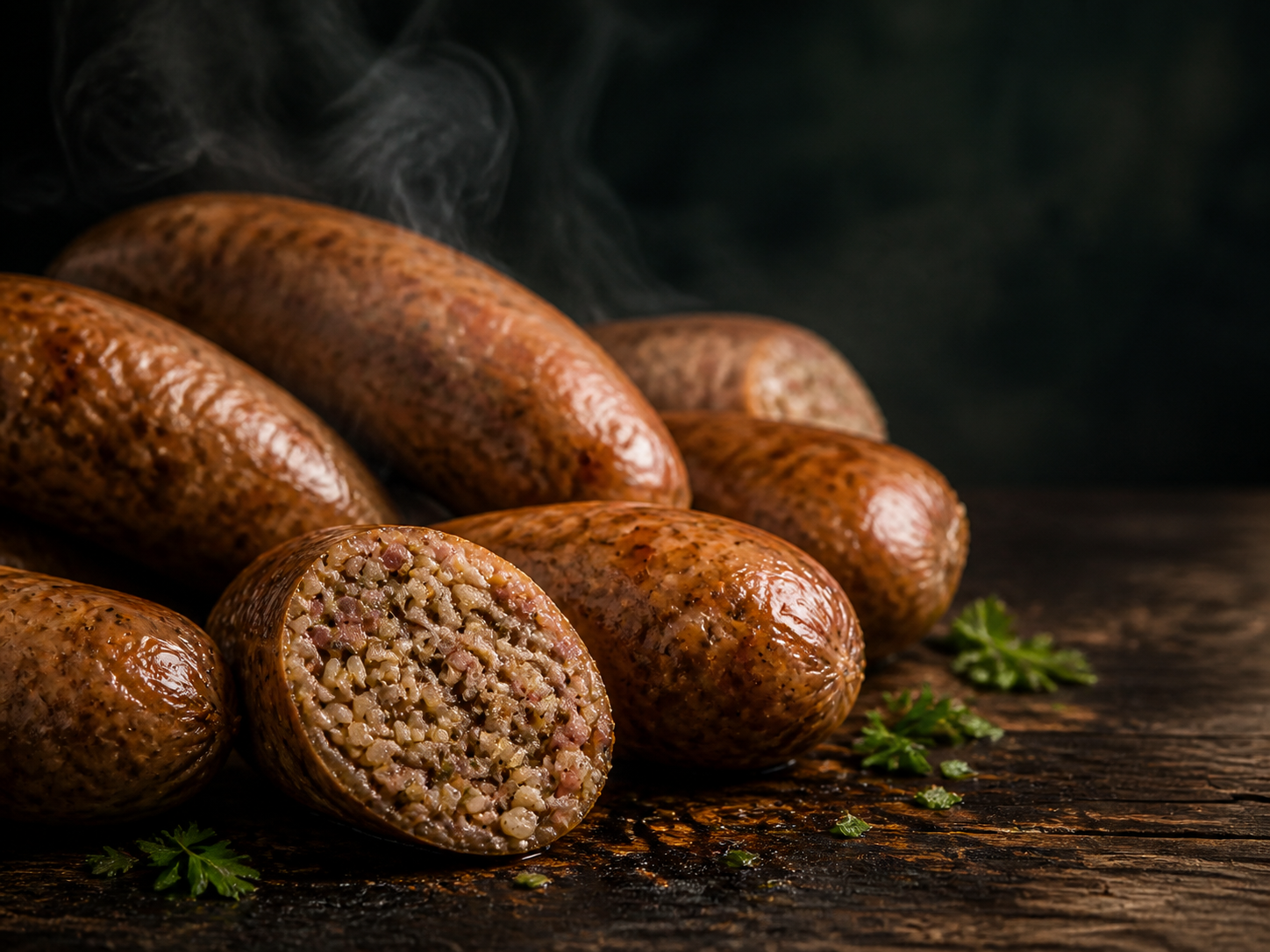
Traditional Louisiana boudin is generally made from cooked meat, rice, broth or cooking liquid, aromatics, and seasoning, commonly stuffed into a casing.
That broad formula is recognizable, but it is not a fixed recipe. Meat selection, rice, liver, herbs, heat, grind, and moisture all change with the maker.
A framework, not one recipe
The five core components
Boudin depends on how its ingredients work together. Meat brings richness, rice carries moisture, broth ties flavors together, aromatics add savory detail, and seasoning establishes balance.
Change the ratio or treatment of any one component and the link can become meatier, softer, looser, drier, greener with herbs, or more assertively peppered.
- Meat
Richness and savory foundation
Cooked pork is the traditional reference point for much Louisiana boudin, though cuts, fat, liver, and alternative proteins vary.
- Rice
Structure and characteristic texture
Cooked rice carries seasoned liquid through the filling and helps create a soft mixture rather than a dense all-meat sausage.
- Broth
Moisture and integrated flavor
Broth or cooking liquid distributes flavor and helps the meat and rice come together without one universal formula.
- Aromatics
Savory detail and freshness
Onion, green onion, garlic, parsley, celery, and pepper vegetables may appear in different combinations depending on the maker.
- Seasoning
Pepper, heat, and balance
Salt, black pepper, chile heat, herbs, and maker-specific blends shape the finish; no single spice blend defines every link.
The savory base
Meat, pork, and liver
Pork is the traditional reference meat for much Louisiana boudin, but recipes differ in cuts, fat, grind, and balance. Seafood and other proteins change the formula rather than following one pork recipe with a simple substitution.
Liver appears in many traditional pork recipes, but not all boudin contains it. Some makers use enough to add noticeable depth; others use a smaller amount or none. Liver is one recipe choice, not a universal test of authenticity.
The characteristic grain
What rice contributes
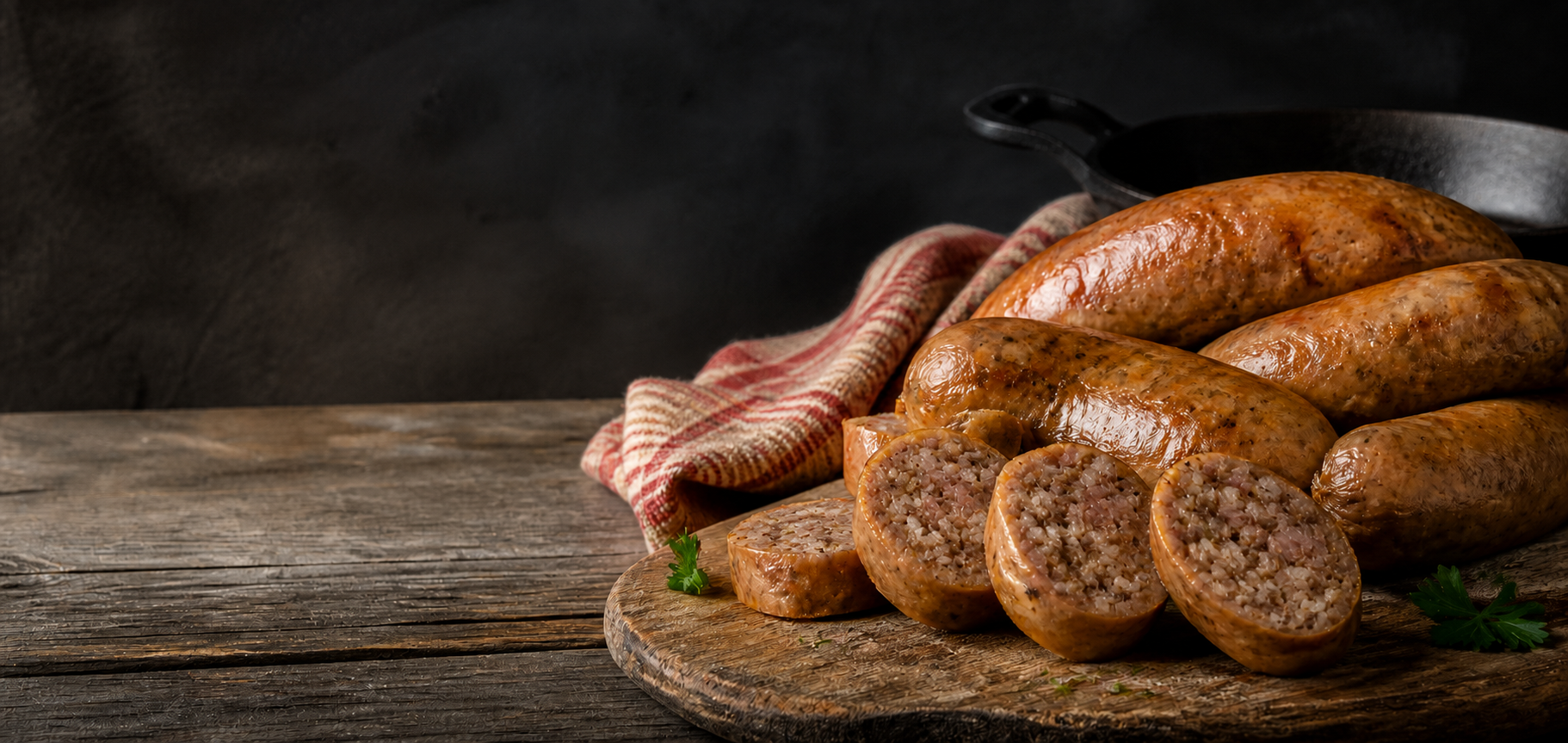
Cooked rice gives the filling structure while absorbing broth and seasoning. It helps distribute moisture through the link and creates the soft, rice-rich texture that distinguishes boudin from a dense all-meat sausage.
The exact rice, grain condition, and meat-to-rice ratio depend on the recipe. More rice does not automatically mean lower quality, just as more meat does not guarantee a better-balanced filling.
Flavor carried through the filling
Broth, aromatics, and seasoning
Broth or cooking liquid adds moisture and carries the flavor of the meat into the rice. The amount matters: too little can leave a filling dry, while a wetter mixture can feel loose or creamy.
Onion and green onion are common, while garlic, parsley, celery, and bell pepper vary by recipe. Salt, black pepper, chile heat, herbs, and maker-specific blends determine whether the finish is mild, peppery, fresh, or more assertive.
“Spicy” is relative. One maker's regular link can be hotter than another maker's hot version, so the specific product is more useful than a universal heat scale.
The formula moves
How ingredients change the final boudin
A meat-forward mixture can feel coarser and richer. More rice or broth can make the filling softer and more yielding. Liver can add savory depth, while fresh aromatics can brighten the finish. Grind affects whether individual pieces remain distinct or blend into a smoother mixture.
Those choices help explain why two makers using similar ingredient categories can produce links that taste and feel very different. The guide to what boudin tastes like covers that broader sensory experience.
Different types use different formulas
Crawfish, shrimp, alligator, smoked, spicy, and other styles can change the protein, moisture, seasoning, and texture balance. Compare the broader types of boudin without treating one formula as universal.
The casing is a separate ingredient question
The finished filling is commonly stuffed into a casing, but casing materials and eating preferences vary. The boudin casing guide explains that exterior in detail.