
Adaptation, not one invention
The History of Boudin
Louisiana boudin did not appear as one fixed recipe at one precise moment. It developed from older sausage-making traditions and changed in Louisiana through local ingredients, regional foodways, and generations of makers.
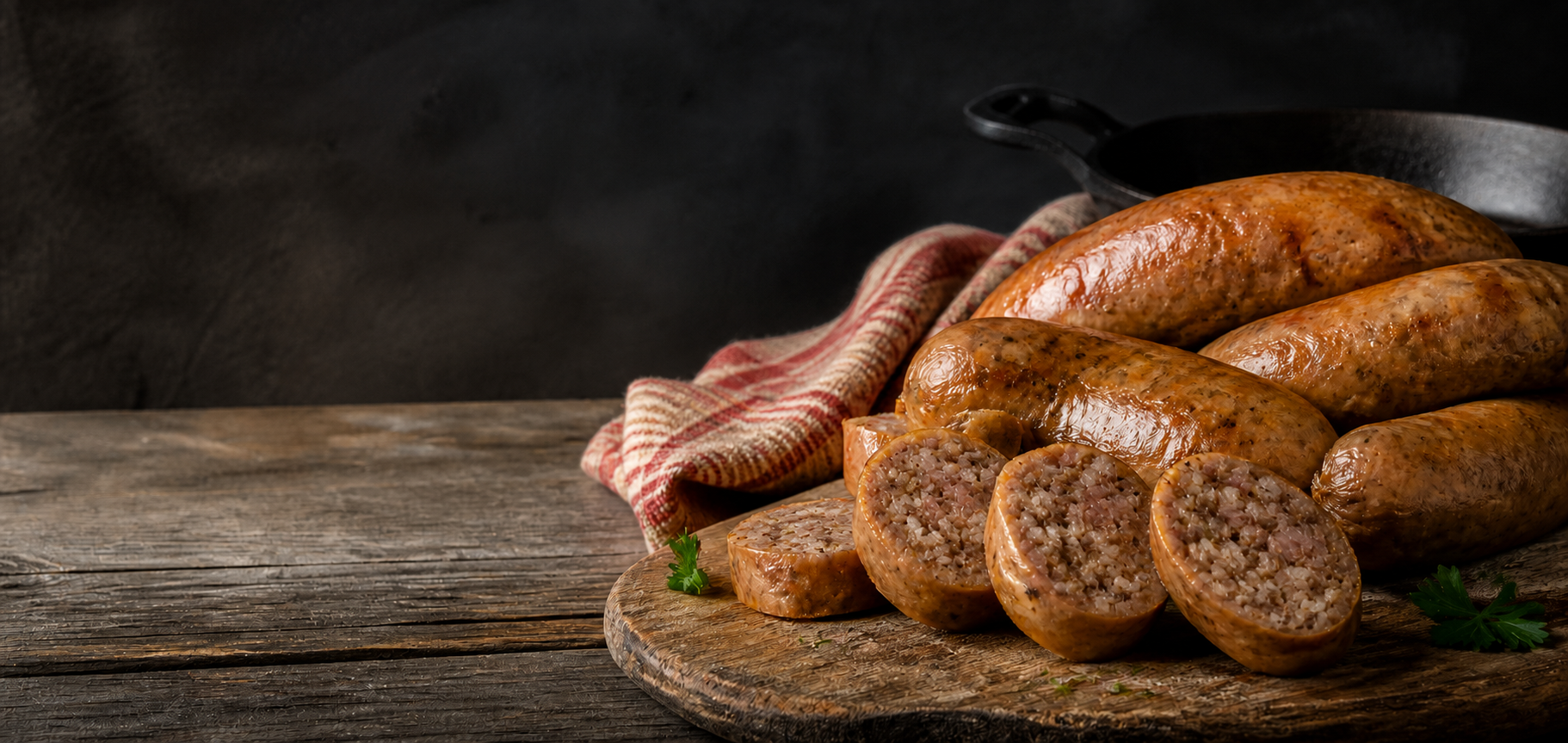
Before Louisiana
Boudin was already a family of sausages.
The French word boudin described sausages before the familiar Louisiana meat-and-rice link developed. In French and other Francophone cooking, the category included preparations such as boudin noir, made with blood, and forms of boudin blanc, a pale sausage whose composition varied by place and period.
Those older foods matter because they establish a linguistic and culinary ancestry. They are not identical to modern Louisiana boudin. The Louisiana version belongs to that broader family, but its rice, texture, seasoning, production, and place in everyday life make it a distinct regional food.
The useful question is not who invented boudin once, but how an inherited idea changed under Louisiana conditions.
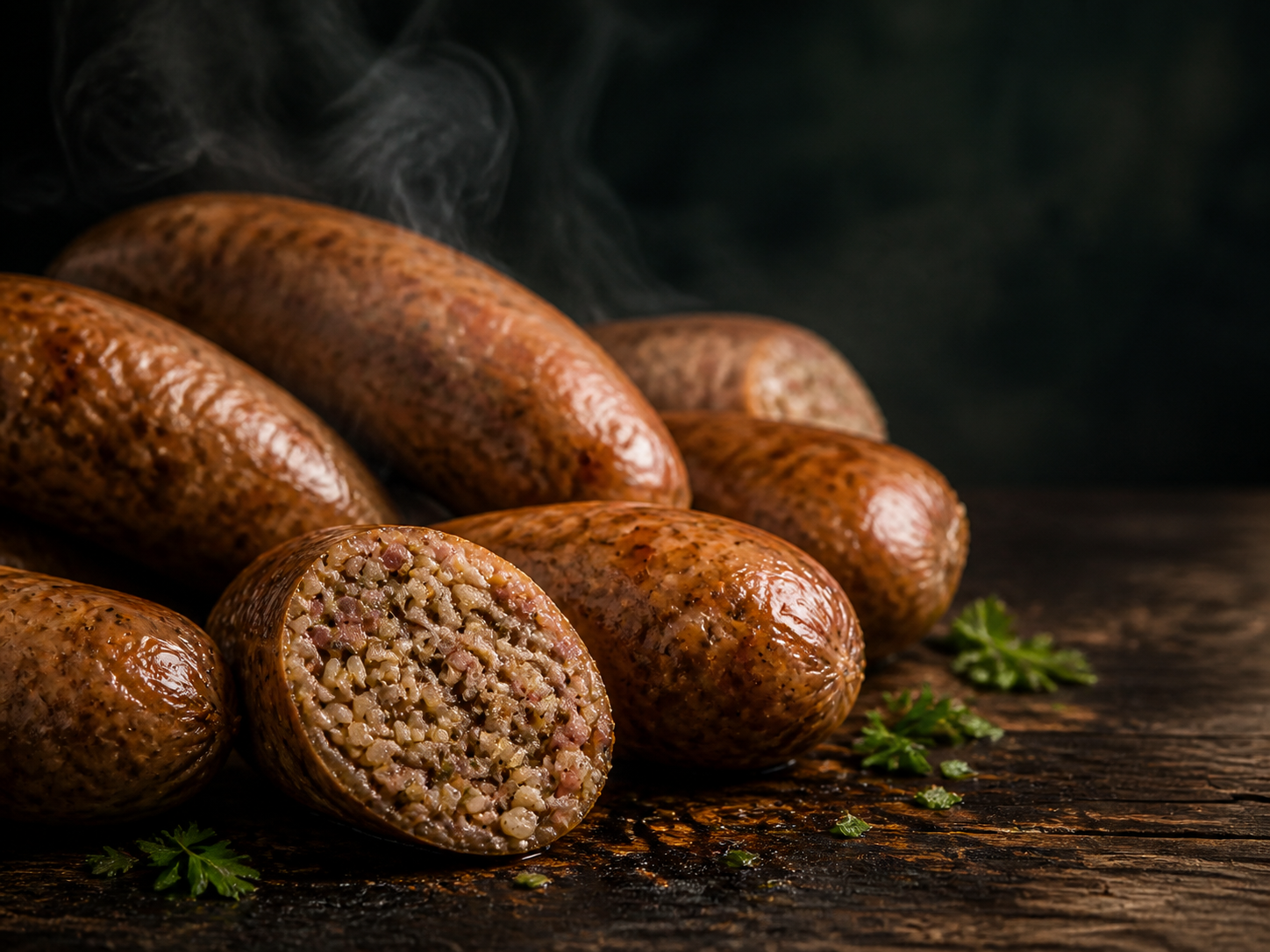
French and Acadian influence
Influence is clearer than a single recipe transfer.
French colonists, French Creoles, Acadian migrants, and other communities brought languages, techniques, tastes, and knowledge of sausage making into Louisiana. Acadians began arriving in Louisiana in the eighteenth century, and their descendants became central to the culture now called Cajun.
That history supports a strong cultural relationship, but it does not establish one documented Acadian recipe arriving on a known date and becoming today's boudin unchanged. Louisiana cooking emerged through contact among many peoples and through repeated adjustment to local agriculture, labor, climate, and available food.
For the present-day relationship between the food and its region, continue to Louisiana boudin.
How Louisiana changed the food
A regional recipe took shape over time.
The modern link reflects several forces working together. None supplies a complete origin story on its own.
- Inherited traditions
- Francophone sausage making, shared butchering knowledge, and the word boudin supplied a broad cultural starting point rather than one fixed recipe.
- Louisiana ingredients
- Pork, rice, broth, organ meats, onions, herbs, and pepper became part of formulas shaped by what households could raise, grow, buy, and use well.
- The maker's hand
- Family preference, available cuts, cooking liquid, grind, seasoning, and casing produced variation from one household and community to the next.
- Commercial counters
- Meat markets, groceries, smokehouses, and roadside stops moved boudin from periodic household production into everyday regional commerce.
Why rice became important
Rice connected the filling to Louisiana agriculture and kitchens.
Rice was established in Louisiana foodways and became a practical partner for cooked pork, broth, aromatics, and seasoning. Over time it helped define the structure and identity of the regional link.
The record does not justify one universal date or one person adding rice for the first time. Its fuller role belongs in why boudin contains rice.
Liver and other cuts
Whole-animal cooking shaped what went into the pot.
Household butcherings and boucheries made it sensible to use trim, organs, cooking liquid, and other parts thoughtfully. Liver could add depth, but recipes varied and still do.
The ingredient question is treated separately in whether boudin contains liver, while the complete formula belongs in what boudin is made of.
From household food to market tradition
Boudin became easier to buy without losing local variation.
For rural households, butchering a hog could be communal work. Fresh preparations used parts that did not need to be cured for long storage, and boudin fit that practical setting. The history was not a straight march from home kitchen to store counter; household and commercial production overlapped.
During the twentieth century, specialized meat markets, groceries, butcher shops, and later convenience stores made hot boudin a regular purchase across South Louisiana. Oral histories collected by Louisiana Folklife show makers carrying family and regional practices into commercial businesses while adjusting equipment and batch size.
Commercial availability helped associate boudin especially with Acadiana and South Louisiana, but current geography and maker variation remain the responsibility of the Louisiana boudin guide.

Modern Louisiana boudin
A recognizable tradition that continues to change
Pork-and-rice boudin remains the historical reference point, but the modern category also includes smoked links, boudin balls, seafood fillings, spicier formulas, and maker-specific variations. These forms show continuity and invention working together rather than a recipe frozen in the past.
Compare that current taxonomy in types of boudin. For the concise definition, return to what boudin is, and use the separate guide for how to pronounce boudin.
Historical sources and limits
The record is stronger on development than on one origin moment.
Food traditions often leave an uneven documentary record. This account therefore distinguishes documented commercial and oral history from broader explanations of cultural influence. It does not assign an inventor, first town, first recipe, or exact date to modern Louisiana boudin.
- The Louisiana Endowment for the Humanities' Boudin encyclopedia entry provides a researched overview and bibliography.
- Louisiana Folklife's interviews with Baton Rouge boudin makers document family practice, production, and meat-market culture.
- LSU Press's published history of boudin identifies continuing research into its Continental French and Louisiana development.