
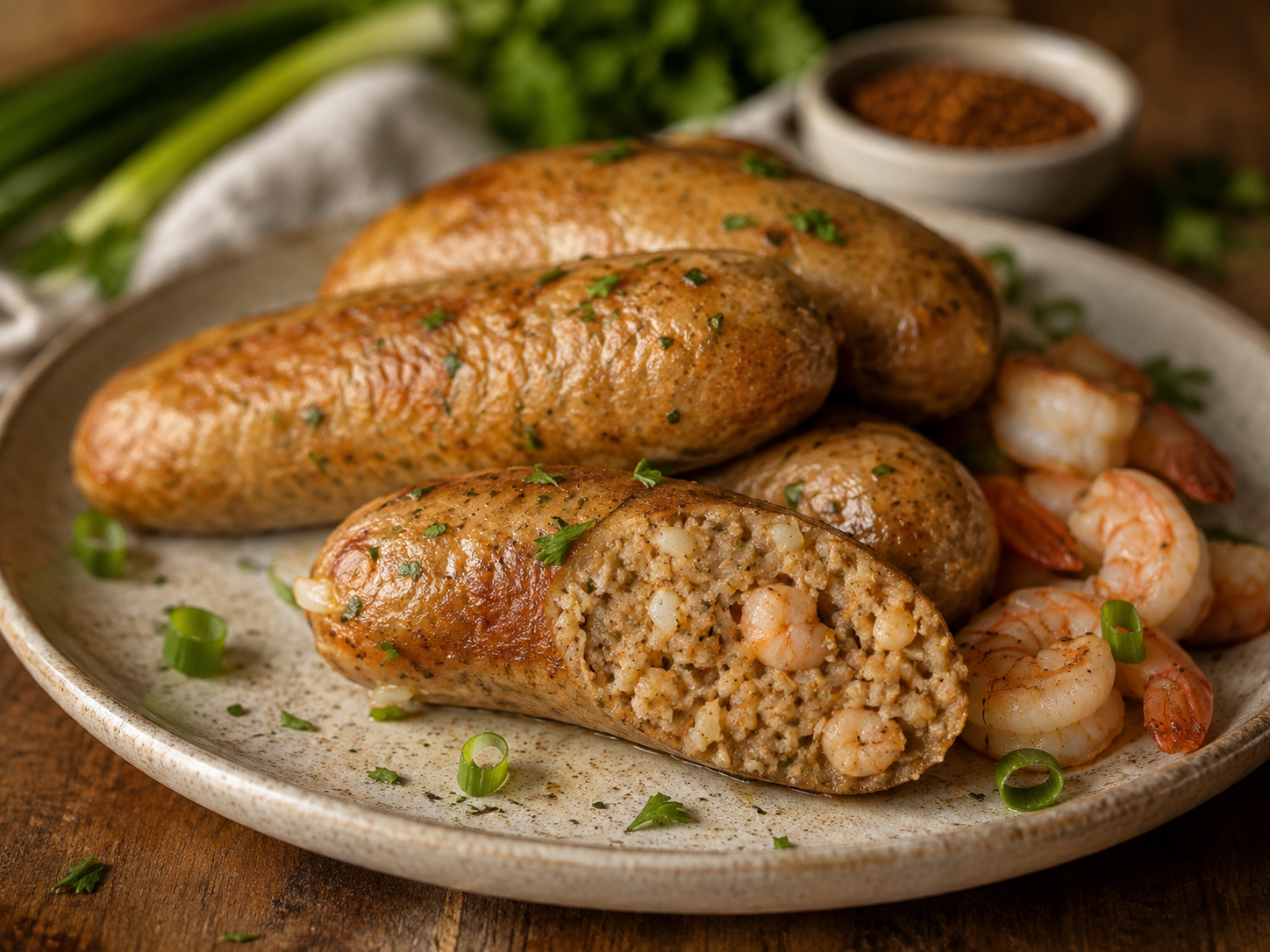
A Louisiana seafood variation
Shrimp Boudin
Shrimp boudin is a Louisiana boudin variation in which shrimp is a defining part of the filling. It is commonly combined with rice, seasoned moisture, aromatics, and pepper, while the exact protein blend and formulation vary by maker.
Read the formula, not only the name
Shrimp identifies the type, not every ingredient.
Two links can both be called shrimp boudin and still have very different balances. One may feature visible shrimp pieces and a clean seafood finish; another may blend shrimp with pork or another protein for more richness and a softer meat profile.
The useful question is not only whether shrimp is present, but how the maker balances shrimp with rice, seasoned liquid, aromatics, fat, pepper, and any companion protein. The broader family is organized in the types of boudin guide.
Shrimp leads
The shrimp must meaningfully shape the identity of the filling.
The blend varies
Pork, another protein, or a different fat balance may support the shrimp.
Seasoning decides heat
Pepper can frame the seafood character or cover it; shrimp is not inherently spicy.
What the filling may contain
A shared framework with shrimp-specific decisions.
Shrimp defines the variation, but no single name reveals every ingredient. The shared ingredient system is explained more fully in what boudin is made of.
- Shrimp
- The defining seafood component. Its size, preparation, and proportion affect whether the filling has visible pieces or a more even shrimp character.
- Rice
- The common structural base. Rice absorbs seasoned liquid and spreads the shrimp, aromatics, and pepper through each portion.
- Broth or cooking liquid
- Seasoned moisture binds the mixture and helps balance a protein that can become firm when overworked or overcooked.
- Aromatics
- Onion, green onion, parsley, celery, bell pepper, garlic, and related choices shape the aroma around the shrimp.
- Seasoning
- Salt, black pepper, cayenne, and other spices set the warmth. Shrimp itself does not determine whether the boudin is mild or hot.
- Other protein or fat
- Some formulas include pork or another protein for richness and texture. Others rely more heavily on shrimp, so the specific label matters.
Does it contain pork?
Sometimes.
Some recipes combine shrimp with pork or another meat; others use a different formula. Check the label when avoidance matters.
Does it contain rice?
Rice is common.
It gives the filling body and carries seasoned moisture. Read why boudin has rice.
Does it contain liver?
It depends.
Shrimp boudin has no universal liver rule. Read more about whether boudin contains liver.
Is it spicy?
Not by definition.
Heat comes from cayenne, black pepper, and the seasoning formula, not from the shrimp.
Flavor and texture
Clean sweetness leaves less room for careless balance.
Shrimp can bring mild seafood sweetness and a firmer, springier bite. Rice, broth, aromatics, and pepper determine whether that character remains clear or disappears into a dry or heavily seasoned filling.
Compared with traditional pork boudin, a shrimp-forward version may feel lighter and less fatty. A blended version can be richer and softer, so the label alone cannot predict the result.
The broader sensory framework belongs in what boudin tastes like.
Shrimp and crawfish are not interchangeable
Two seafood fillings, two different signals.
Seafood boudin is a useful umbrella description, not a single recipe. Shrimp and crawfish bring different flavors and textures, while each maker still decides the rice, moisture, seasoning, and companion-protein balance.
Shrimp boudin
Cleaner sweetness and a springier bite.
Shrimp can read as mild, lightly sweet, and distinct in texture, especially when pieces remain visible and seasoning stays in proportion.
Crawfish boudin
Earthier shellfish savor and softer tail meat.
Crawfish can bring a more earthy tail-meat character that interacts differently with fat, herbs, and pepper. Explore the crawfish boudin guide.
High-level production
The shared method remains; shrimp changes the handling.
This is the shrimp-specific outline, not a recipe. The complete shared sequence belongs in how boudin is made.
- 01
Build the seasoned base
The maker develops aromatics, broth, and seasoning for the particular protein blend used in the formula.
- 02
Prepare the shrimp
Shrimp is cooked and handled with enough restraint to preserve its flavor and avoid a dry or rubbery texture.
- 03
Balance rice and moisture
Rice joins the shrimp and seasoned liquid. The ratio determines whether the filling feels seafood-forward, rice-forward, loose, or firm.
- 04
Adjust, stuff, or form
The filling is checked for moisture and seasoning, then placed in casing or used in another established form.
Variation without rigid subtypes
One name can hold several deliberate balances.
Shrimp boudin remains recognizable when shrimp meaningfully shapes the filling. It does not require one shrimp-to-rice ratio, heat level, companion protein, casing, or finish.
Shrimp-forward
A larger or more visible shrimp component lets clean seafood sweetness and a springier bite lead the filling.
Blended protein
Shrimp may share the filling with pork or another protein that changes richness, savoriness, moisture, and texture.
Mild or pepper-forward
One maker may leave room for shrimp and aromatics while another builds a stronger cayenne or black-pepper finish.
Links, smoked links, or balls
Casing, smoke, and formed portions are maker choices rather than requirements built into the shrimp-boudin name.
Shrimp boudin balls
The type can appear outside a link.
Shrimp-boudin-style filling may be formed, breaded, and fried. That change in form is explained in the guide to boudin balls.
Louisiana context
A seafood variation within a larger tradition.
Shrimp boudin connects Louisiana seafood ingredients with the rice-based boudin framework. The regional setting belongs in Louisiana boudin.