
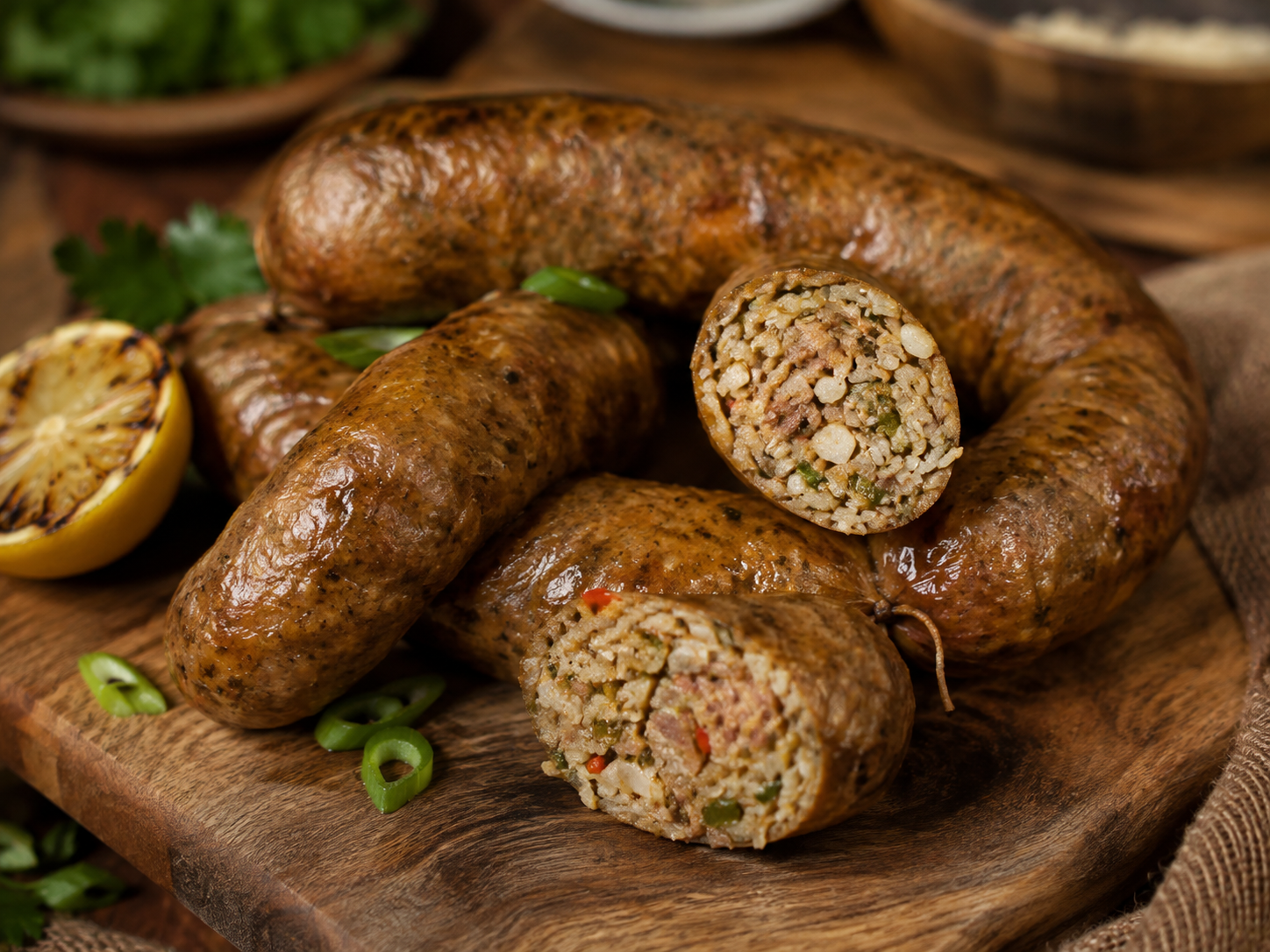
A Louisiana protein variation
Alligator Boudin
Alligator boudin is a Louisiana boudin variation in which alligator is a defining part of the filling. It is commonly combined with rice, seasoned moisture, aromatics, and pepper, while the exact meat blend and proportion vary by maker.
Read the formula, not only the name
The label tells you the lead ingredient, not the whole recipe.
Two links can both be called alligator boudin and still taste and feel quite different. The useful question is not only whether alligator is present, but how much of the meat character comes from it and how the maker balances rice, broth, seasoning, fat, and any other meat.
Some formulations combine alligator with pork or another meat; others rely more heavily on alligator. The name identifies the defining alligator component, not a universal single-protein recipe. Anyone avoiding pork or another ingredient should check the specific label.
That variation is normal within the broader family of Louisiana boudin styles.
Alligator present
The protein must be meaningful to the identity of the filling.
Blend varies
Pork, another meat, added fat, or a different approach may support the formula.
Balance decides
Rice, broth, aromatics, and seasoning determine how the alligator is perceived.
What the filling may contain
A common framework with maker-specific choices.
Alligator defines the variation, but no one name can reveal every ingredient. The shared system is explained more fully in what boudin is made of.
Alligator
The defining protein component. Its cut, preparation, and proportion affect how clearly its mild meat character comes through.
Rice
The common structural base. It carries seasoned liquid and helps the filling remain recognizably boudin rather than a meat-only sausage.
Broth or cooking liquid
Seasoned moisture binds the filling and matters especially when a maker is balancing a firmer or leaner-feeling protein.
Aromatics
Onion, green onion, parsley, celery, bell pepper, garlic, and related choices vary by recipe and shape the finished aroma.
Seasoning
Salt, black pepper, cayenne, and other spices determine the warmth. Alligator itself does not make the boudin hot.
Other meat or fat
Some formulas include pork, pork fat, or another meat for richness and texture. Others use a different balance, so the label matters.
Does it contain pork?
Sometimes. Pork or pork fat may add richness and moisture, but it is not safe to assume every formula contains it.
Does it contain rice?
Usually. Rice is a common structural part of Louisiana boudin, carrying seasoned liquid and shaping the bite.
Does it contain liver?
It depends on the recipe. Alligator boudin does not establish a universal rule for liver use.
Is it spicy?
It can be mild or hot. Pepper and the broader seasoning formula create heat; the protein does not.
The role of grain is covered in why boudin has rice.
The ingredient distinction is covered in whether boudin contains liver.
Flavor and texture
Mild meat character leaves the recipe exposed.
Alligator meat can contribute a relatively mild savory flavor. In boudin, that means broth, pepper, aromatics, rice, moisture, and any companion meat can be as noticeable as the alligator itself. Calling the filling gamey says little about how a particular maker has built it.
Compared with traditional pork boudin, an alligator-forward version may feel leaner or firmer. A blended version can be richer and softer. Neither result follows from the label alone; proportion, fat, grind, moisture, and seasoning decide the bite.
For the broader vocabulary of richness, grain, pepper, casing, and finish, see what boudin tastes like.
High-level production
The shared method remains; the protein balance changes.
This is the type-specific outline, not a recipe. The common sequence belongs in how boudin is made.
- 01
Cook and season the base
The maker develops broth, aromatics, and seasoning with the meats or other ingredients used in that formula.
- 02
Prepare the protein
Alligator and any companion meat are cooked and reduced to a texture that will distribute through the filling without disappearing.
- 03
Balance rice and moisture
Rice and seasoned liquid join the protein. This balance has a major effect on whether the filling feels firm, loose, rich, or rice-forward.
- 04
Season, stuff, or form
The filling is adjusted, then stuffed into casing or used in another established form such as a boudin ball.
Variation without false rules
One name can describe several deliberate balances.
These are recipe directions, not separate formal categories. Each changes how clearly the alligator, rice, smoke, pepper, and other meats register in the finished boudin.
Alligator-forward
A larger or more noticeable alligator component lets its mild savory character lead the meat profile.
Blended meat
Alligator may share the filling with pork or another meat that changes richness, fat, moisture, and texture.
Mild or pepper-forward
Heat comes from the seasoning formula. One maker may emphasize aromatics while another builds a sharper pepper finish.
Fresh or smoked
Some established versions are smoked, which adds aroma and firms the casing, but smoking is not a universal requirement.
Alligator boudin balls
A type can appear in a different form.
Alligator-boudin-style filling may be formed, breaded, and fried. The form-specific distinctions belong in the guide to boudin balls.
Louisiana context
A regional ingredient, not a novelty test.
Alligator has an established place in Louisiana food culture. Here it functions as a legitimate boudin ingredient, not a tourist stunt. The broader cultural setting belongs in Louisiana boudin.