
One process, many maker decisions
How Boudin Is Made
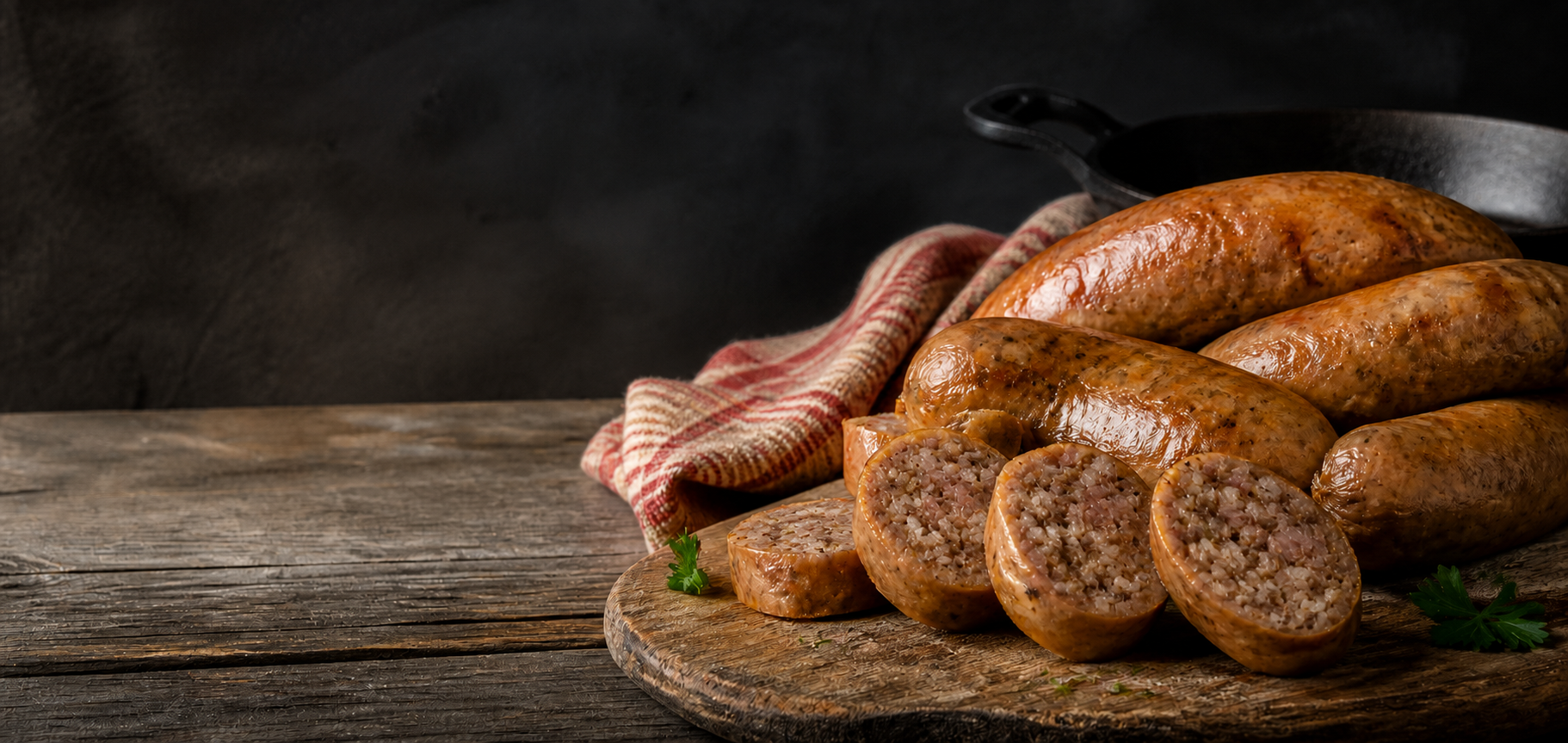
Louisiana boudin is generally made by cooking meat and aromatics, preparing rice, grinding the cooked meat, combining everything with seasoned cooking liquid, adjusting the filling, and stuffing it into casing. The sequence is recognizable; the formula belongs to the maker.
The shared logic
The method is a framework, not a universal recipe.
Most traditional pork boudin follows a common production order, but makers do not all use the same cuts, quantities, grind, rice, liquid, seasoning, casing, or equipment. Those decisions are why two links can both be recognizably Louisiana boudin and still taste completely different.
This page owns the production sequence and the way process choices affect texture. For ingredient roles, start with what boudin is made of. Questions about liver, rice, and casing each have their own deeper guide.
From pot to link
Seven stages in the boudin-making sequence
01
Build the base
Cook the meat and save the cooking liquid
A maker cooks the chosen meat with aromatics and seasoning until it is ready to break down for the filling. The flavorful liquid left in the pot is valuable: it can carry meat flavor, seasoning, and moisture into the final mixture.
Where makers differ: Cuts, organ meats, aromatics, cooking method, and the strength of the liquid vary by maker.
02
Prepare the grain
Cook the rice
Rice is prepared so it can hold its shape while absorbing flavor and moisture later. Many makers cook it separately, which gives them control over its condition before it meets the ground meat and cooking liquid.
Where makers differ: Rice variety, doneness, batch method, and the liquid used to cook it all influence the final texture.
03
Set the texture
Grind or chop the cooked meat and aromatics
The cooked meat and softened aromatics are reduced to the texture the maker wants. Grinding distributes meat throughout the filling; chopping or using a coarser plate can leave more distinct pieces and a meatier bite.
Where makers differ: A fine grind feels more unified. A coarse grind makes the meat and aromatics easier to notice.
04
Bring it together
Combine meat, rice, liquid, and seasoning
The cooked rice and ground meat are mixed with enough cooking liquid to bind the filling and distribute flavor. Seasoning is adjusted through the mixture rather than treated as a surface coating.
Where makers differ: Meat-to-rice balance, retained fat, broth, herbs, pepper, and mixing style are signatures of the maker.
05
Judge the filling
Adjust moisture, seasoning, and consistency
Before stuffing, the maker reads the mixture. It needs enough moisture to stay tender and enough structure to hold together. Small adjustments to cooking liquid or seasoning can change how the filling tastes and behaves.
Where makers differ: A wetter mixture can feel softer and looser; a drier mixture can feel firmer but may lose tenderness.
06
Give it form
Stuff the filling into casing
For links, the finished filling moves through a stuffer into casing and is divided into portions. Hand-crank and powered equipment accomplish the same basic job, but careful pressure matters so the link is full without being packed so tightly that it splits.
Where makers differ: Casing type, link size, fill pressure, and whether the filling is left uncased depend on the product and maker.
07
Finish for the intended style
Cool, hold, smoke, or shape it another way
Fresh links are cooled and handled for sale or storage. Some makers add smoke; others portion the filling without casing or shape it into boudin balls. The finish should match how the product will be sold and eventually eaten.
Where makers differ: Fresh, smoked, frozen, uncased, and ball forms share a family resemblance but are not interchangeable products.
The maker's hand
Process choices become eating texture.
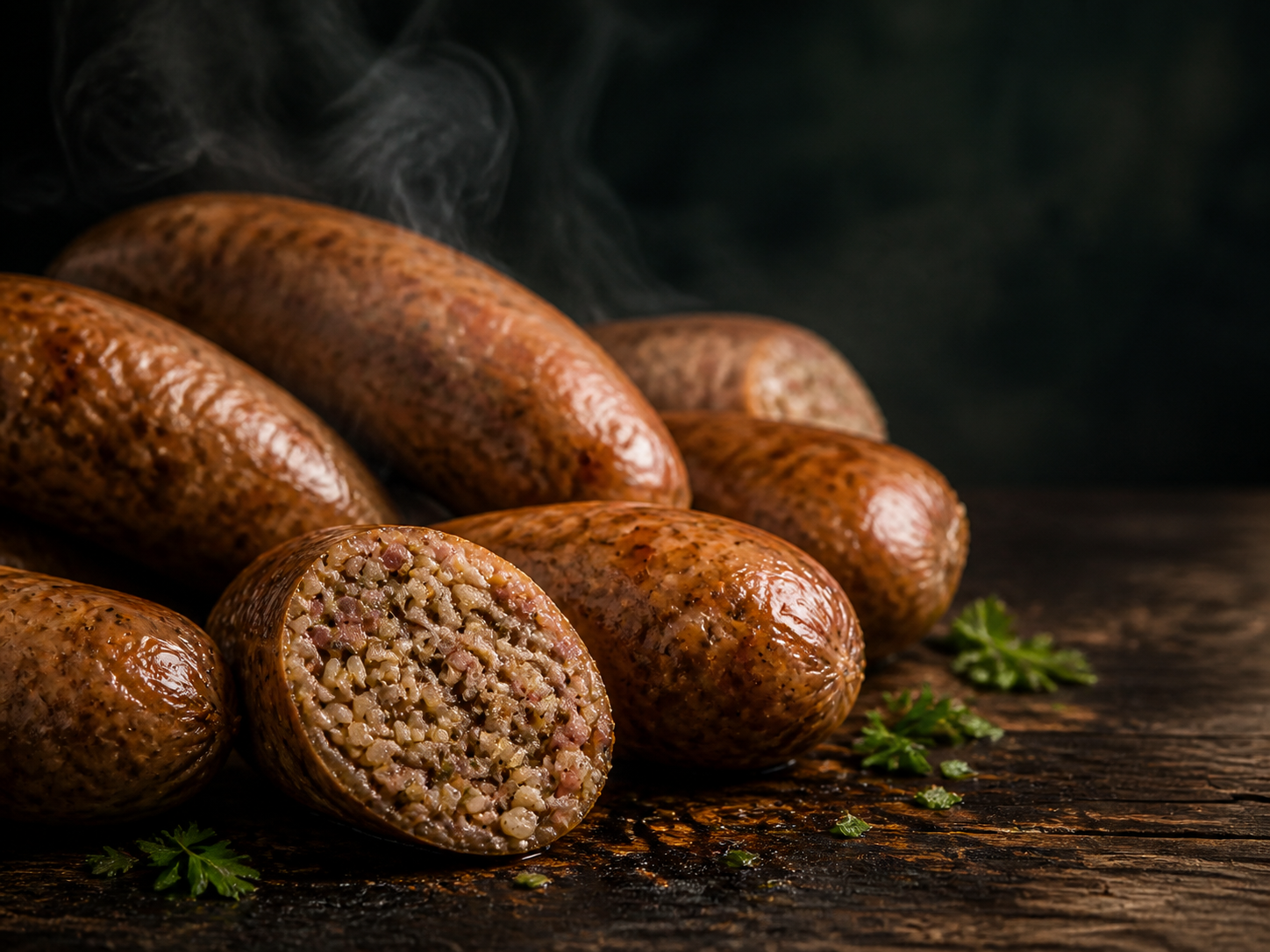
Ingredients matter, but handling determines how those ingredients meet. A maker can change the feel of boudin without changing its basic identity.
- Meat selection
- Richness, savoriness, and how strongly the meat leads
- Grind
- Fine and unified or coarse with distinct pieces
- Rice condition
- Separate grains, softer body, and moisture absorption
- Cooking liquid
- Tenderness, cohesion, and flavor carried through the filling
- Mixing
- Even distribution or a more visibly varied texture
- Casing and finish
- Soft, smoky, firm, browned, or left uncased
The result can be meat-forward or rice-forward, fine or coarse, loose or cohesive, mild or peppery. Learn how to taste and compare those differences.
A necessary distinction
Making boudin is not the same as heating a finished link.
The process above creates the filling and forms the product. What a customer does later depends on whether that finished boudin is sold fresh, fully cooked, chilled, frozen, or smoked. Package directions and product condition should guide preparation.
For steaming, grilling, baking, air frying, microwaving, and frozen-link guidance, use the separate how to cook boudin guide. That page owns finished-product heating, not production.
Keep exploring
Follow the part of boudin you want to understand next.
Ingredients
See how meat, rice, cooking liquid, aromatics, and seasoning work together in the ingredient guide.
Forms and styles
Compare pork, seafood, smoked, blood, and other types of boudin, including boudin balls.
Origins
Put today's production sequence in context with the history of Louisiana boudin.