
Heat is a style dimension
Spicy Boudin
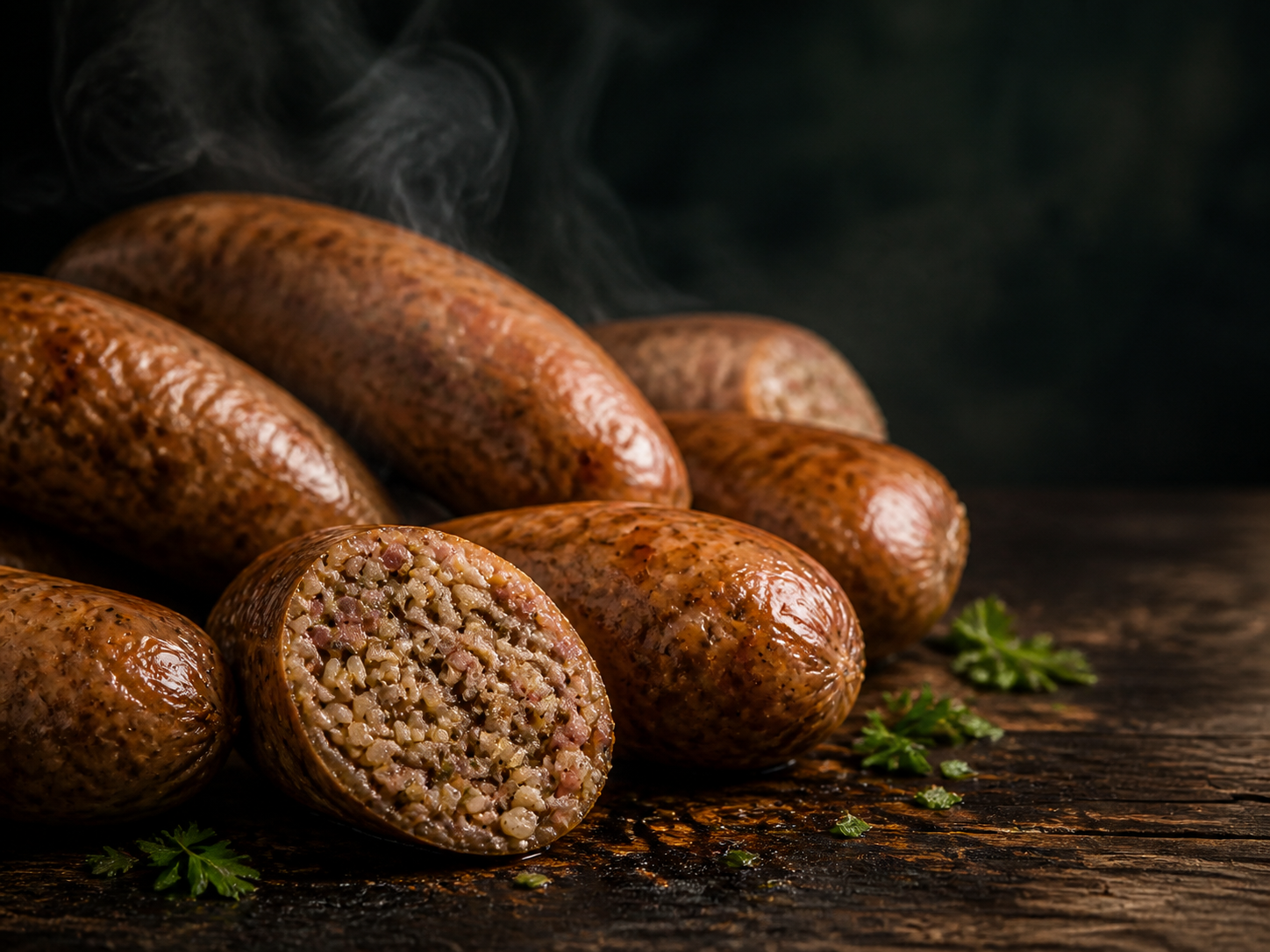
Spicy boudin is boudin made with more pronounced pepper or chile heat than a milder version. There is no universal heat level: ingredients, proportions, and labels vary by maker.
“Hot boudin” often means the same general style when “hot” refers to spice. In another context, it may simply mean boudin served warm.
The direct answer
Is all boudin spicy?
No.
Boudin can be mild, peppery, moderately spicy, or genuinely hot. One maker's regular link may have more heat than another maker's hot version, because those labels are not standardized.
Seasoned does not automatically mean hot. Louisiana boudin can have a strong savory character from broth, garlic, herbs, aromatics, salt, or smoke without carrying much chile heat. The broader family is mapped in the types of boudin guide.
More than one kind of heat
Black-pepper bite is not the same as chile heat.
“Spicy” is not one flavor. A useful description identifies how the warmth arrives, what carries it, and how long it remains.
Pepper-forward
Black pepper may give a dry, aromatic bite that reads as peppery without producing the same sensation as chile heat.
Warmly seasoned
Garlic, aromatics, broth, herbs, salt, and pepper can create intensity even when the chile level remains restrained.
Chile-hot
Ground chile, fresh or dried peppers, pepper sauce, or a seasoning blend may create a sharper or more obvious heat where used.
Lingering
Some heat arrives after the first bite and remains in the finish; other heat feels quick and fades sooner.
Spicy versus well-seasoned
Flavor intensity does not come from chile alone.
The shared ingredient framework belongs in what boudin is made of. Here, the important question is which parts create heat and which parts make the filling taste more complete.
Seasoning intensity
Salt, garlic, herbs, aromatics, broth, and smoke can make a link vivid and deeply savory without making it very hot.
Pepper bite
Black pepper can add aroma and a quick dry bite. Depending on the amount, it may feel warm or assertive without behaving like chile.
Chile heat
Cayenne or another ground chile, fresh or dried peppers, pepper sauce, or a blend may contribute heat where a maker chooses to use it.
No standard heat scale
Why spice level varies by maker.
Boudin does not have an official mild, medium, or hot standard, and a product should not be assigned a Scoville rating without verified testing. The maker's formula and the balance of the whole filling determine perceived heat.
Even the same amount of chile can seem different when richness, rice, moisture, smoke, sweetness, or serving temperature changes.
- Pepper selection
- Black pepper, ground chile, fresh or dried peppers, and blended seasonings produce different kinds of warmth.
- Amount and timing
- Quantity matters, but when seasoning enters the process can also affect how evenly it moves through the filling.
- Meat and rice
- A richer, meat-forward filling may carry heat differently from a softer or more rice-forward one.
- Broth and moisture
- Seasoned liquid spreads pepper through the filling and influences whether heat feels concentrated or integrated.
- Fat and richness
- Fat can round the edges of heat while keeping pepper aroma and savory depth present.
- Smoke and sweetness
- Smoke can deepen the finish, while natural sweetness in seafood or aromatics can change the perception of chile.
How heat changes the bite
Heat can reveal one flavor and obscure another.
Pepper can cut through pork richness, sharpen herbs, deepen a smoky finish, or make broth taste more assertive. In seafood boudin, heat may frame natural sweetness or cover it when chile becomes the main impression.
The broader work of judging meat, rice, moisture, texture, casing, and finish belongs in the guide to what boudin tastes like. This page stays focused on the heat within that larger sensory balance.
Pork boudin
Pepper and chile can sharpen a rich pork-and-broth base without changing its underlying type.
Spicy versions can cross typesCrawfish boudin
Heat may frame crawfish sweetness and savoriness, or cover them when the seasoning dominates.
Spicy versions can cross typesShrimp boudin
A restrained pepper balance leaves room for shrimp sweetness; a hotter formula makes chile more prominent.
Spicy versions can cross typesAlligator boudin
Because alligator can feel comparatively lean, moisture, companion meats, and pepper balance strongly shape the result.
“Spicy” describes an attribute that can cross protein categories. It does not identify one universal base recipe, and those protein-and-heat combinations do not need separate routes.
“Hot” needs context
Spice level and serving temperature are different.
“Hot boudin” may describe spicy boudin, especially when people are comparing heat levels. It can also mean a link that has just been heated and is warm enough to eat. The surrounding words usually make the meaning clear.
Serving temperature does not establish spice level, and smoking does not make a filling spicy by itself. For preparation and reheating, use the dedicated guide to how to cook boudin.
What peppers are used?
There is no required pepper. Cayenne, black pepper, fresh or dried peppers, sauces, and blends may appear, but the maker's formula controls the answer.
Does spicy mean authentic?
No. Heat is a style choice, not a test of authenticity. Mild and peppery boudin belong to Louisiana tradition too.
Can smoke add heat?
Smoke adds aroma and a darker finish, not chile heat. A smoked boudin may also be spicy, but the two attributes are separate.